Finding out who controls the small box on India's rooftops.
Every rooftop solar system has a small computer that reports to a cloud and takes commands back. Most of them are designed, connected and controlled from outside India.
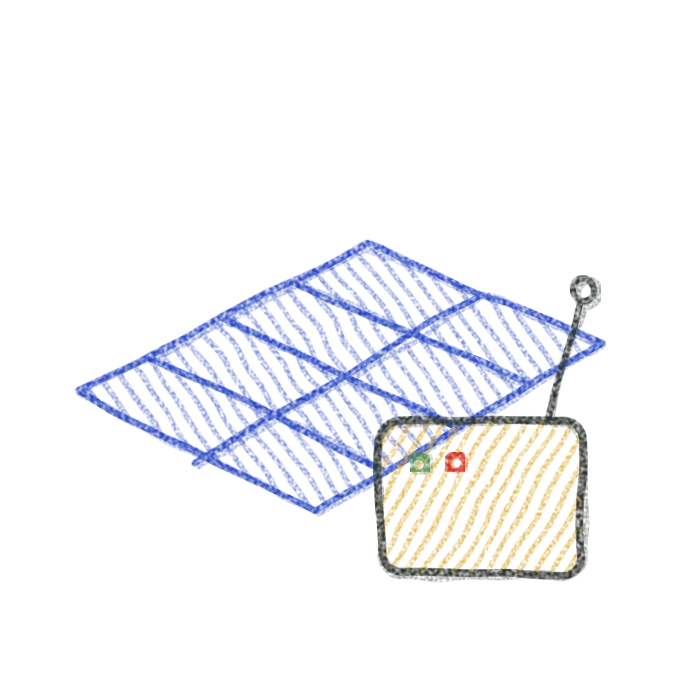
How it works
-
The panel makes power
Sunlight in, DC power out.
-
The inverter makes it usable
DC in, AC out for your home and the grid.
-
The logger reports
A small stick plugs into the inverter and sends its data out every 5 minutes, over Wi-Fi or 4G, to a cloud and then to an app on your phone.
-
Commands come back
Settings and firmware updates travel the other way, from the app and cloud back to the inverter on your roof.
- Inverter
- Logger
- Wi-Fi / 4G
- Cloud
- App
The numbers
Four in five are Chinese brands
3%
2015
80%
2023
And about 40 lakh more go up every year
What we know
85 to 90 lakh homes by March 2027
PM Surya Ghar takes its last applications on 31 March 2027. In September 2026 MNRE said it expects 85 to 90 lakh households by then, short of the 1 crore target.
Who makes the apps
Open the app that came with a rooftop solar system and you’ll usually find it was made by the inverter maker or by a monitoring company such as IGEN Tech (SOLARMAN Smart), SolaX (SolaXCloud) or Growatt (ShinePhone). Each of those apps has more than 10 lakh downloads.
Buying an Indian brand doesn’t change much. Solaryaan uses FoxESS hardware and the SolaX app. Polycab uses Senergy boards, and its first app came from IGEN. Havells uses SOFAR hardware with a portal run by a Solarman partner.
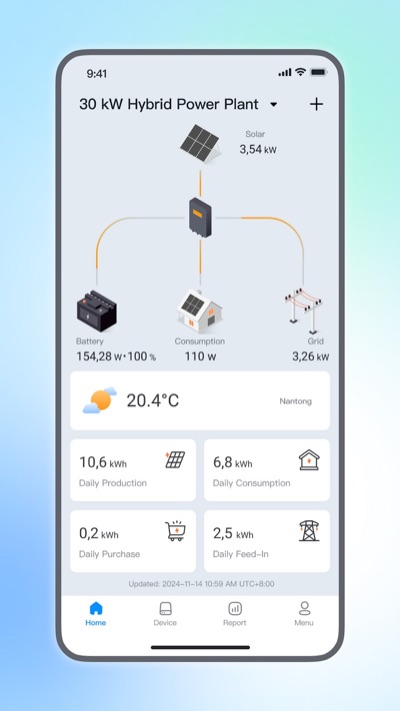
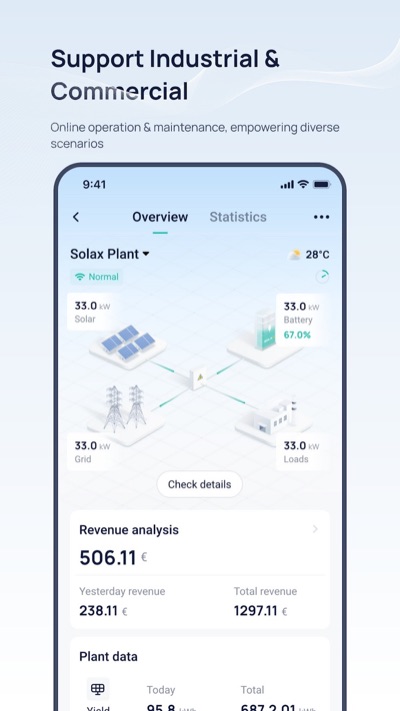
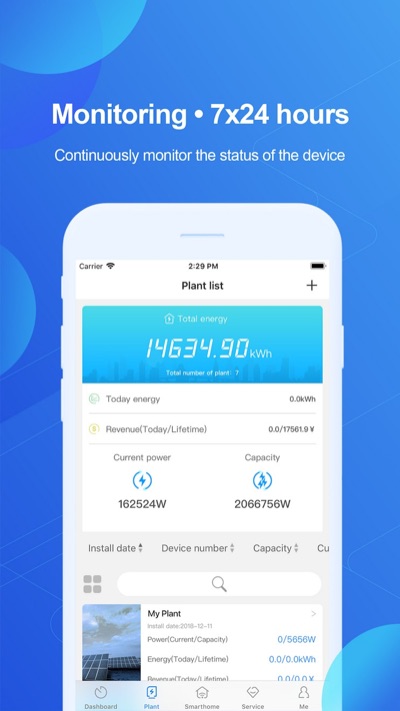
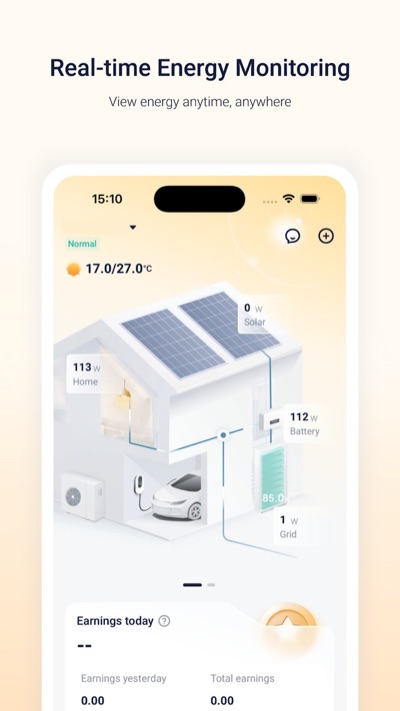
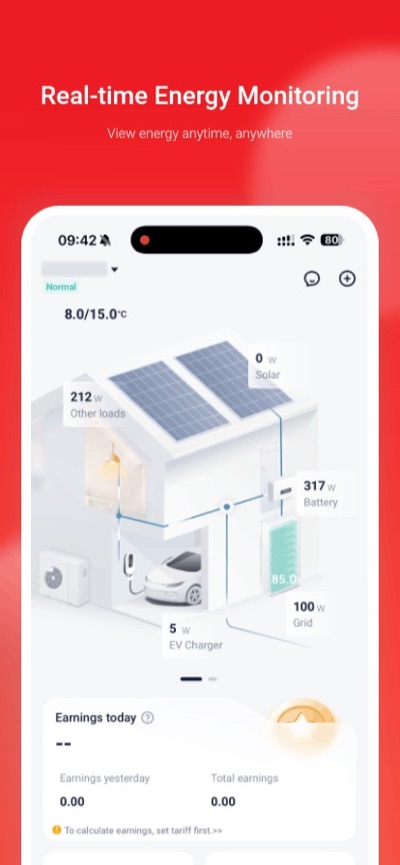
The parts underneath come from eastern China too: the Wi-Fi/LTE chip that sends the data and the cloud it goes to.
The logger comes free
Most inverter makers give their app and cloud away with the inverter, so independent logger makers survive mainly on commercial and utility sites that mix brands. MNRE’s memo of 17 August 2026 also asks makers to cover the logger under the inverter’s warranty, which ties it even closer to whoever made the inverter.
What’s inside a logger
Our logger board
We drew our own board in August 2025 to see how much is really in the box. Five main parts do the work, and a student can lay it out.
Inside a SOLARMAN logger
We also took a real one apart: a SOLARMAN Wi-Fi logger of the kind that screws onto an inverter’s 9-pin serial port.
The case, and opening it
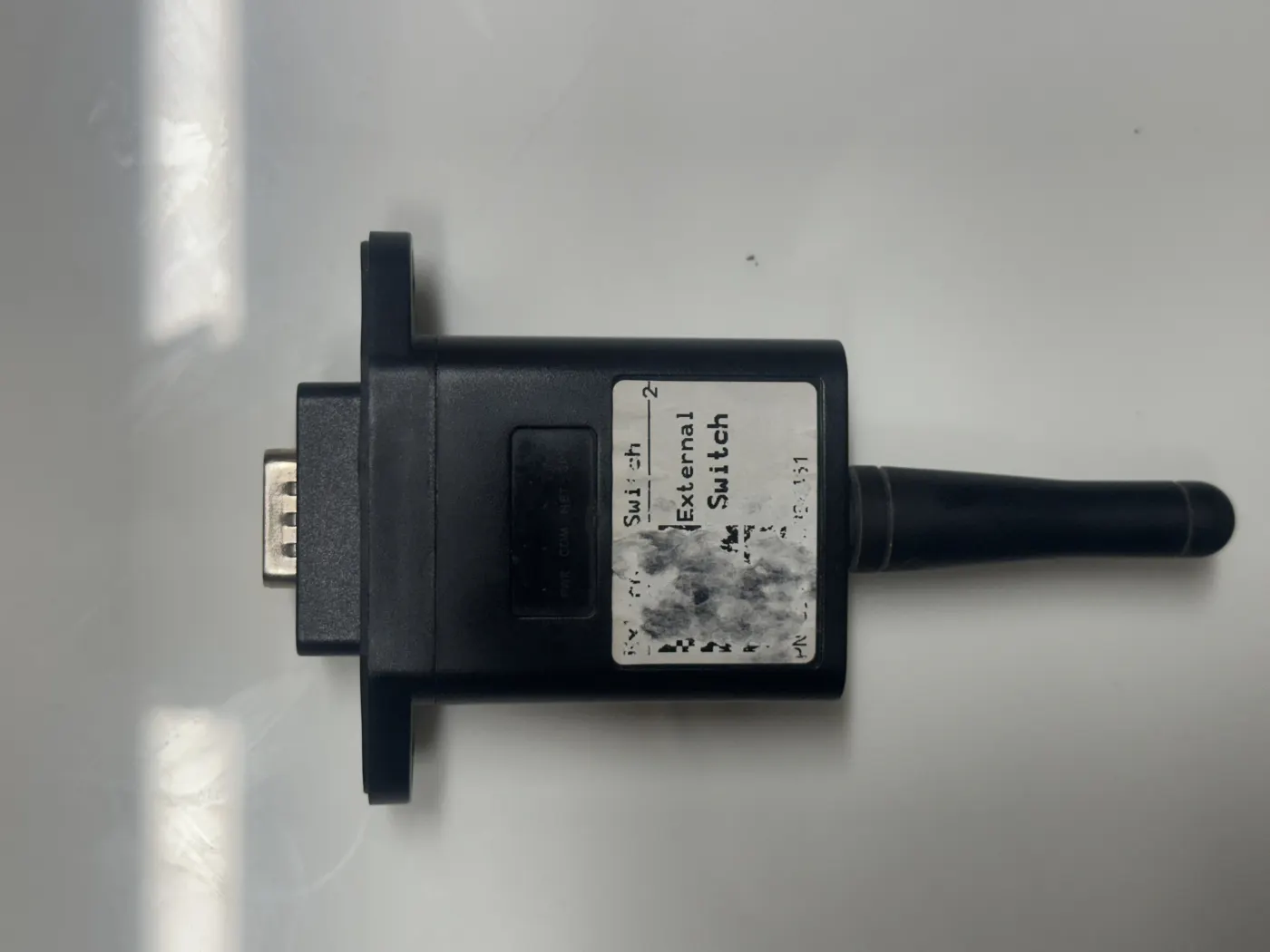
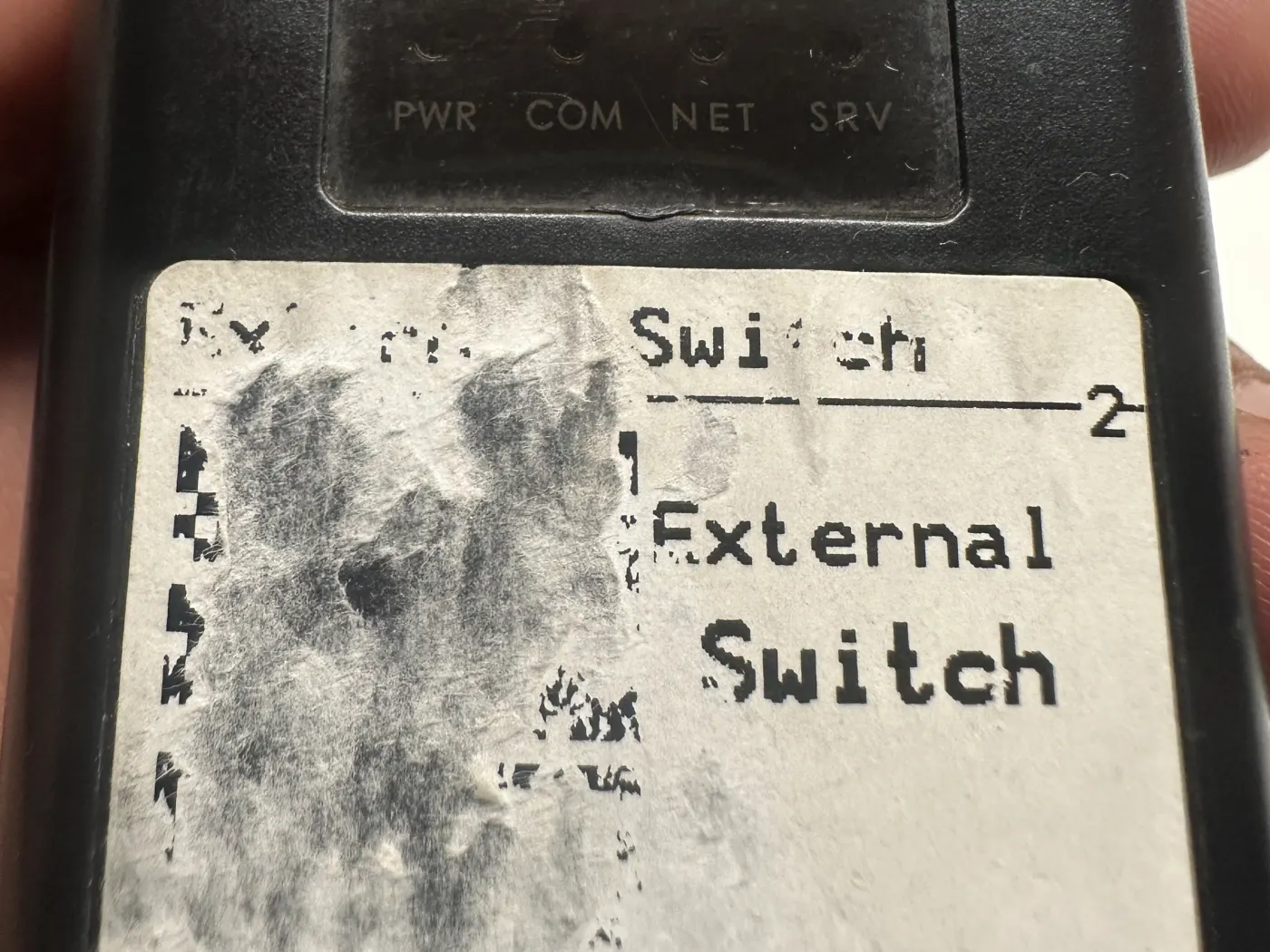
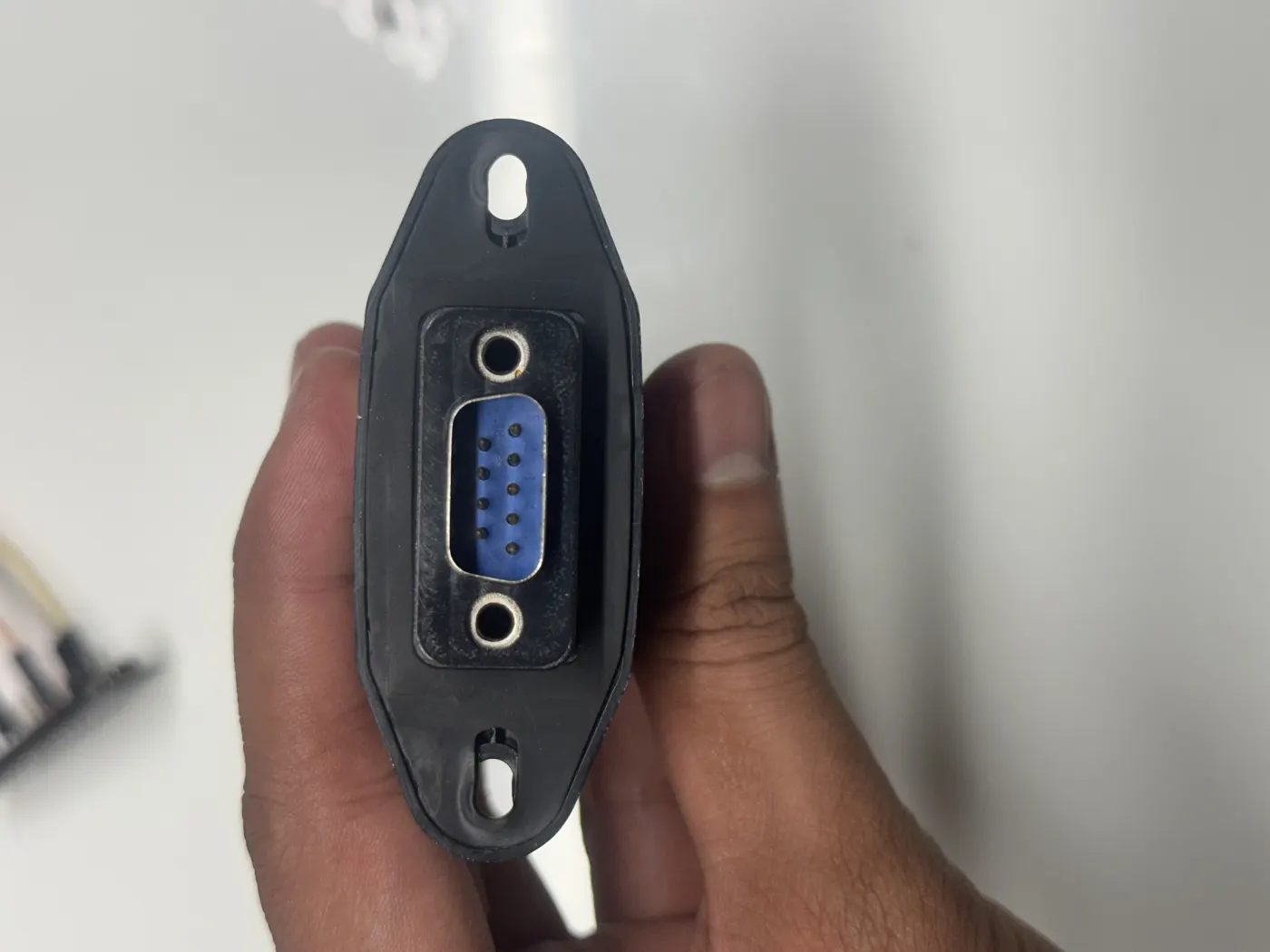
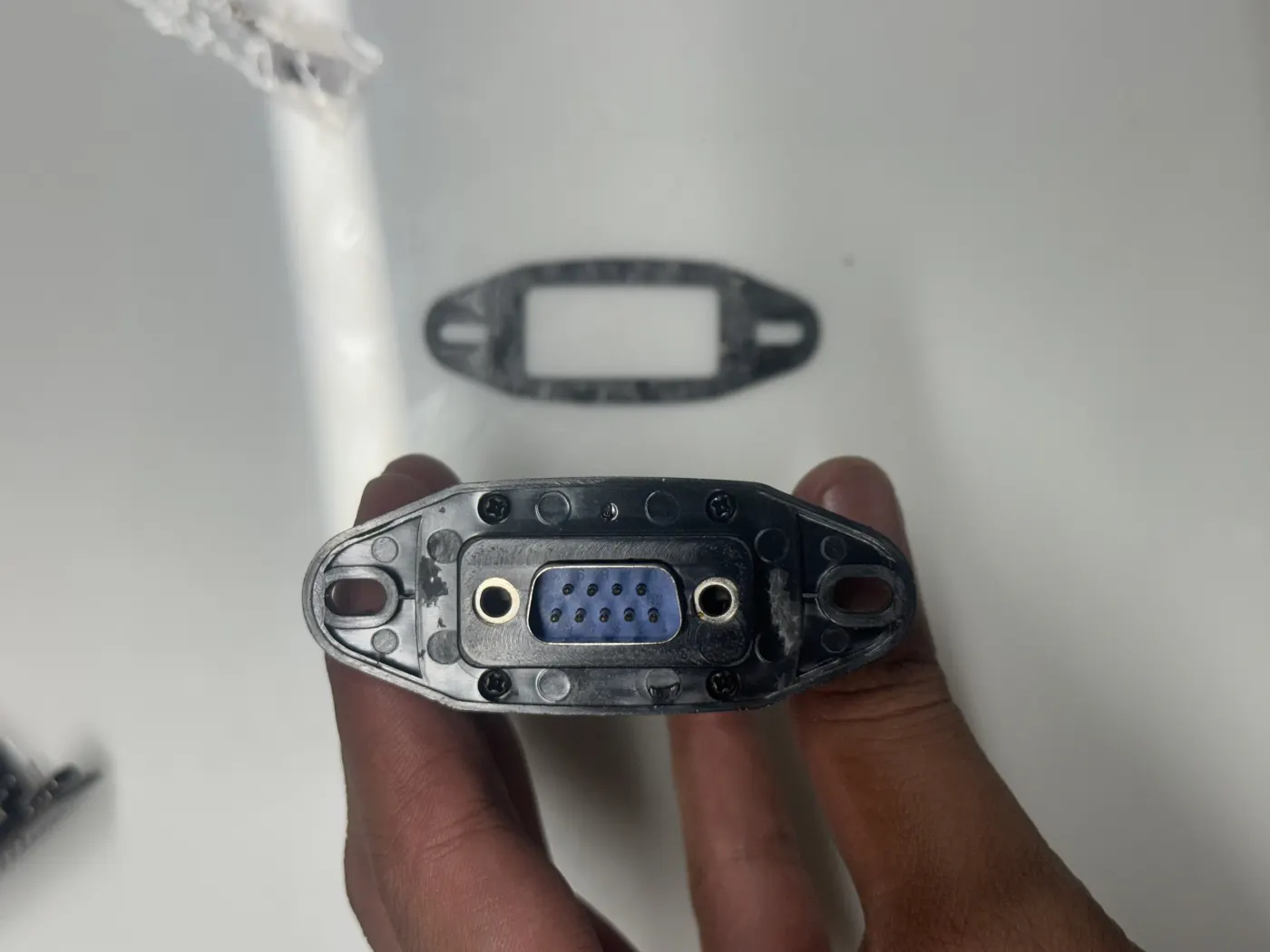
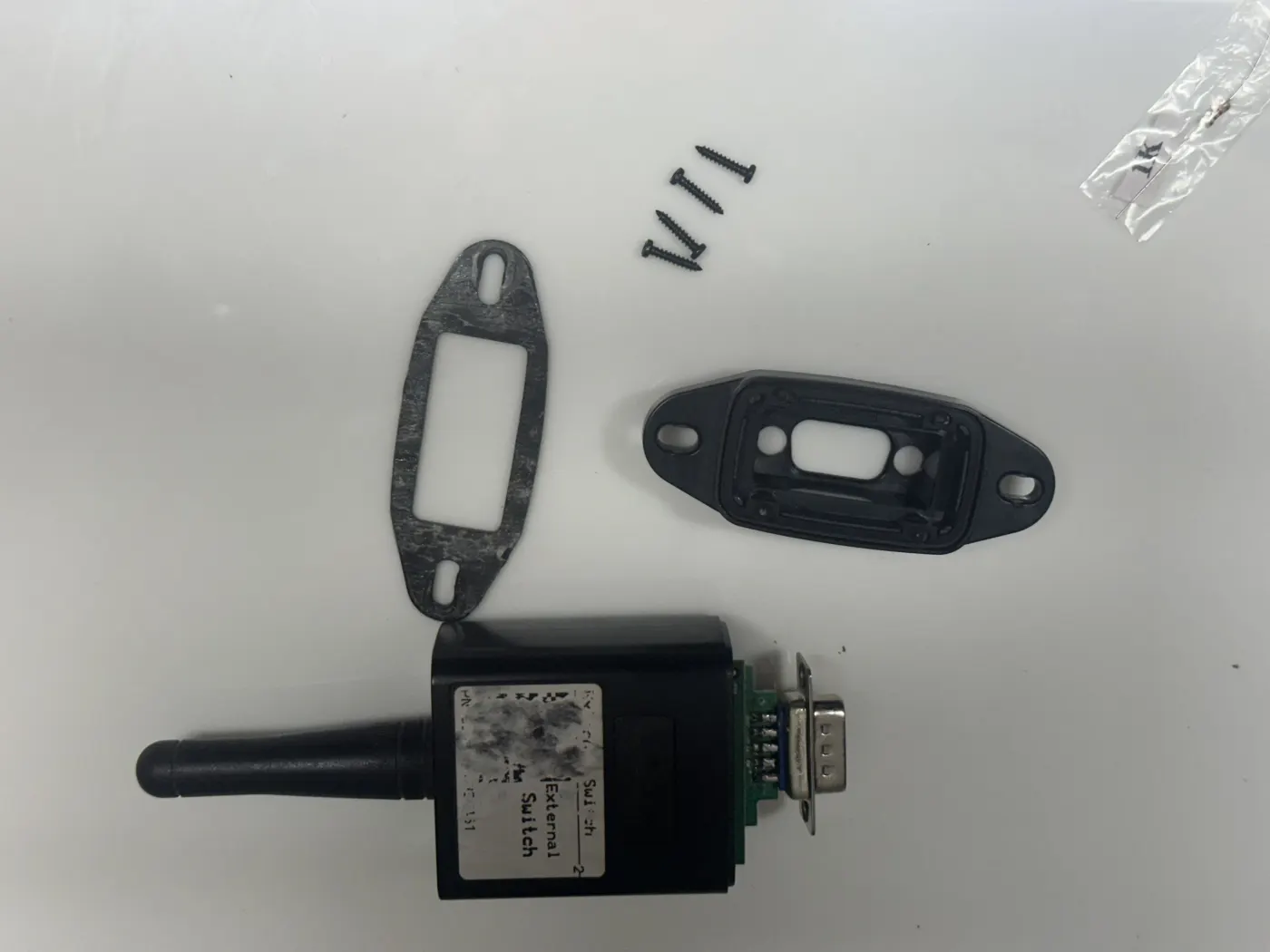
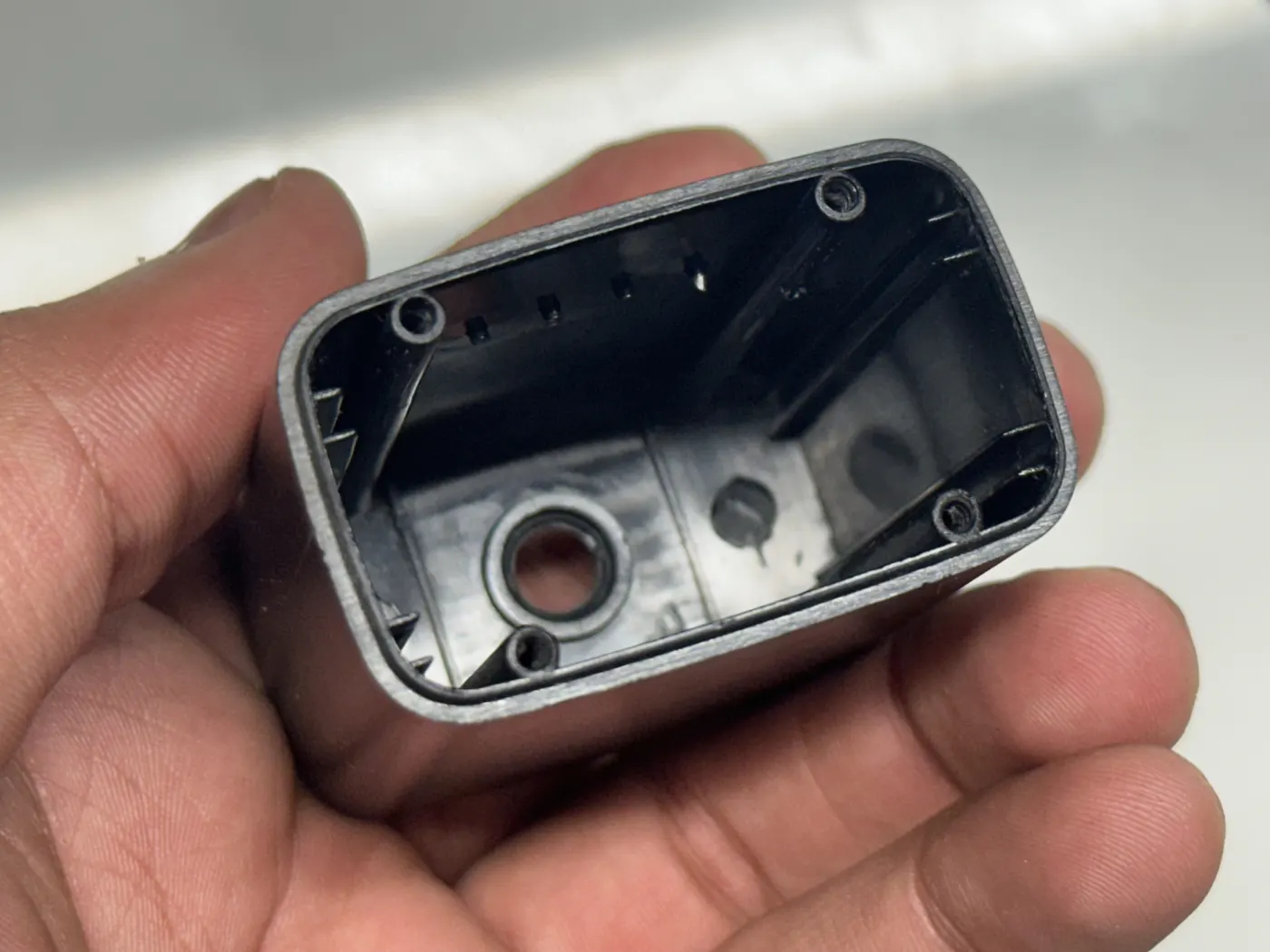
The logger is a black plastic case a little bigger than a matchbox, with a mounting flange and a plug at one end and a stubby screw-on antenna at the other. A smoked window on top shows four lights, printed PWR, COM, NET and SRV. The label that should give the model and serial number has worn away; all that can still be read is “Switch” and “External Switch”. The plug end is an oval flange with two mounting slots, so the logger is bolted to the inverter’s port rather than just pushed in.
A rubber gasket seals the flange against the inverter. Under it, three small screws hold the end plate on, and once it is off the two boards slide out of the case together. The antenna unscrews from a gold SMA socket on the board, which pokes through a hole at the far end of the case.
Two boards
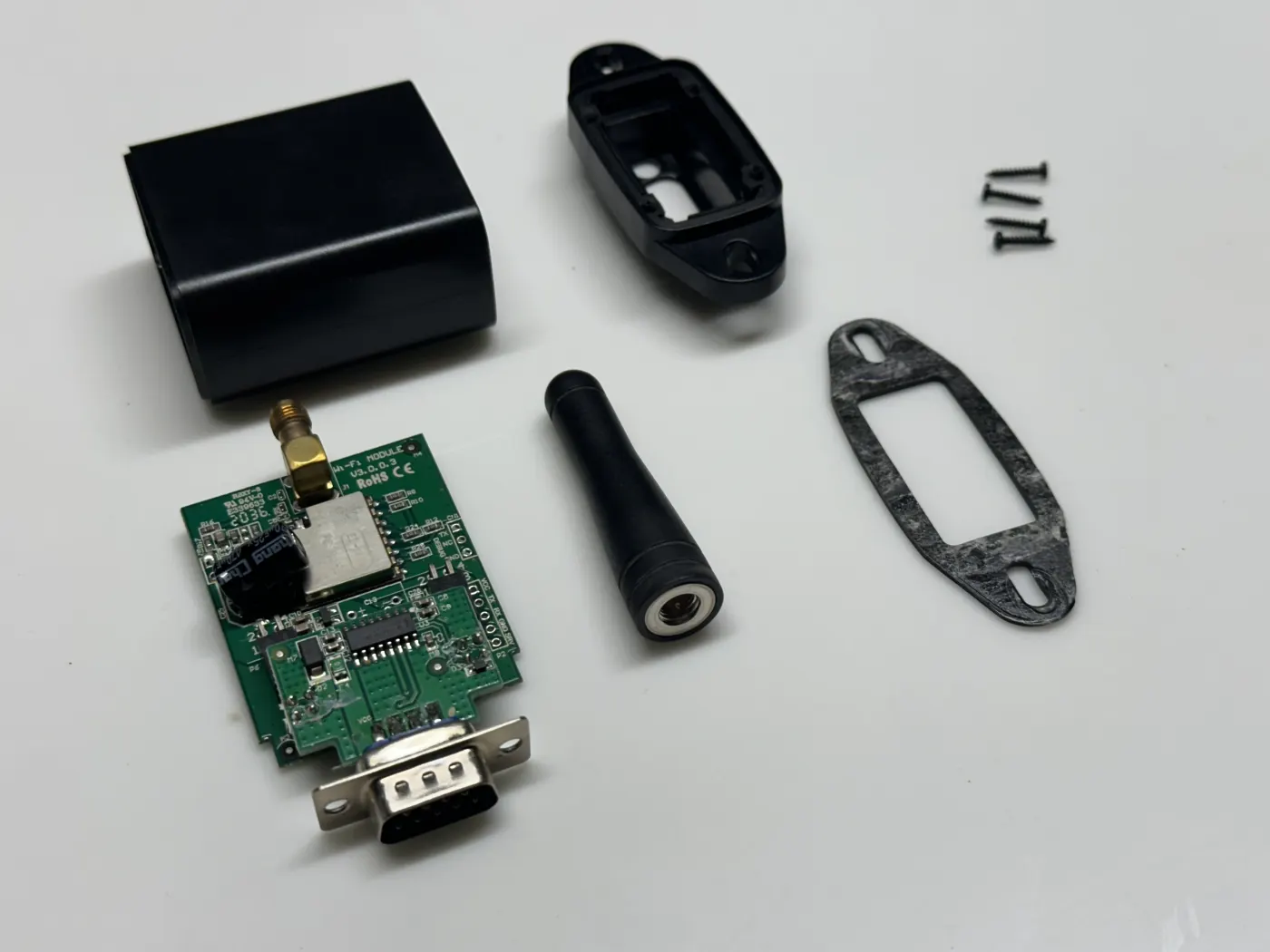
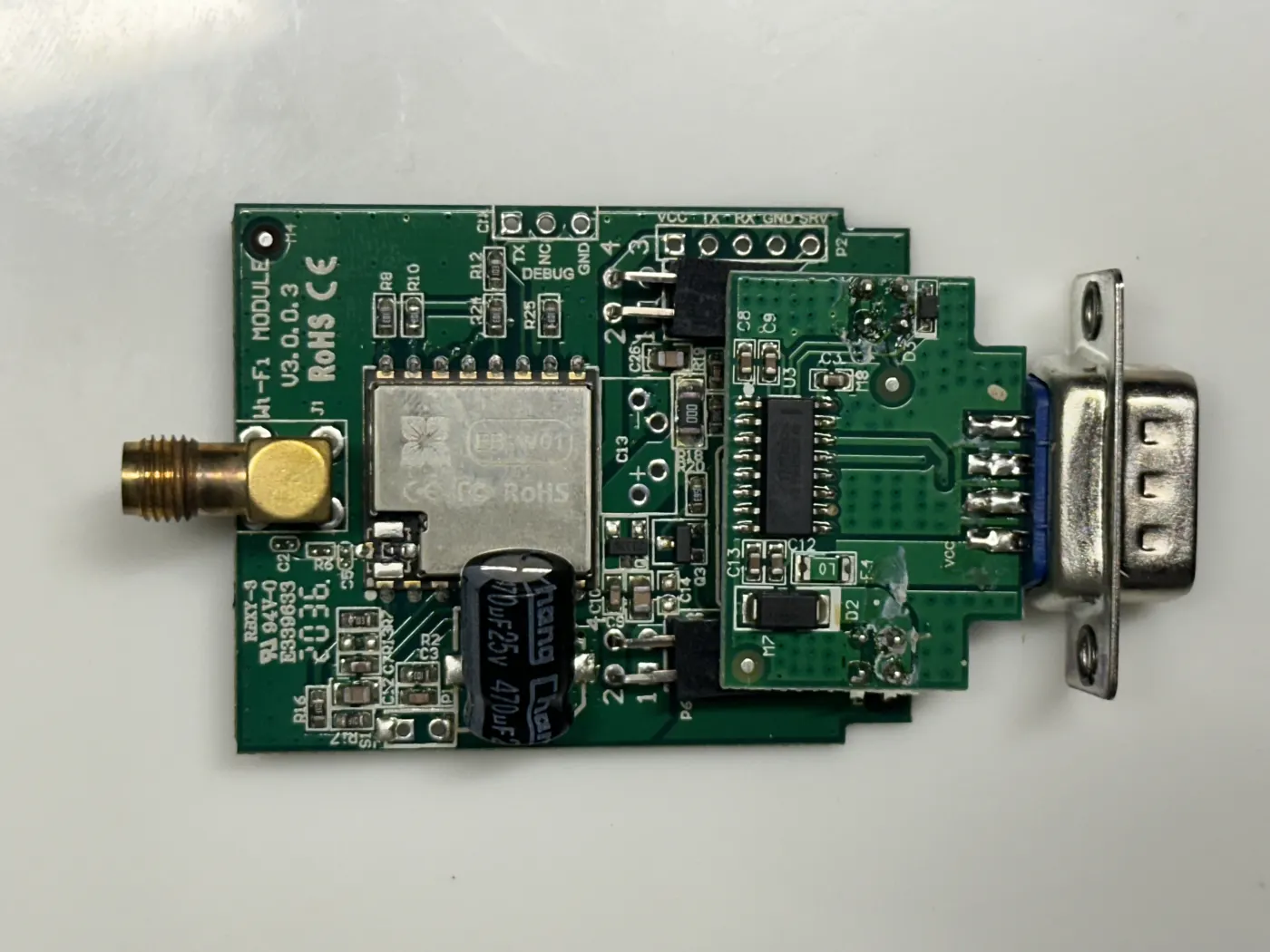
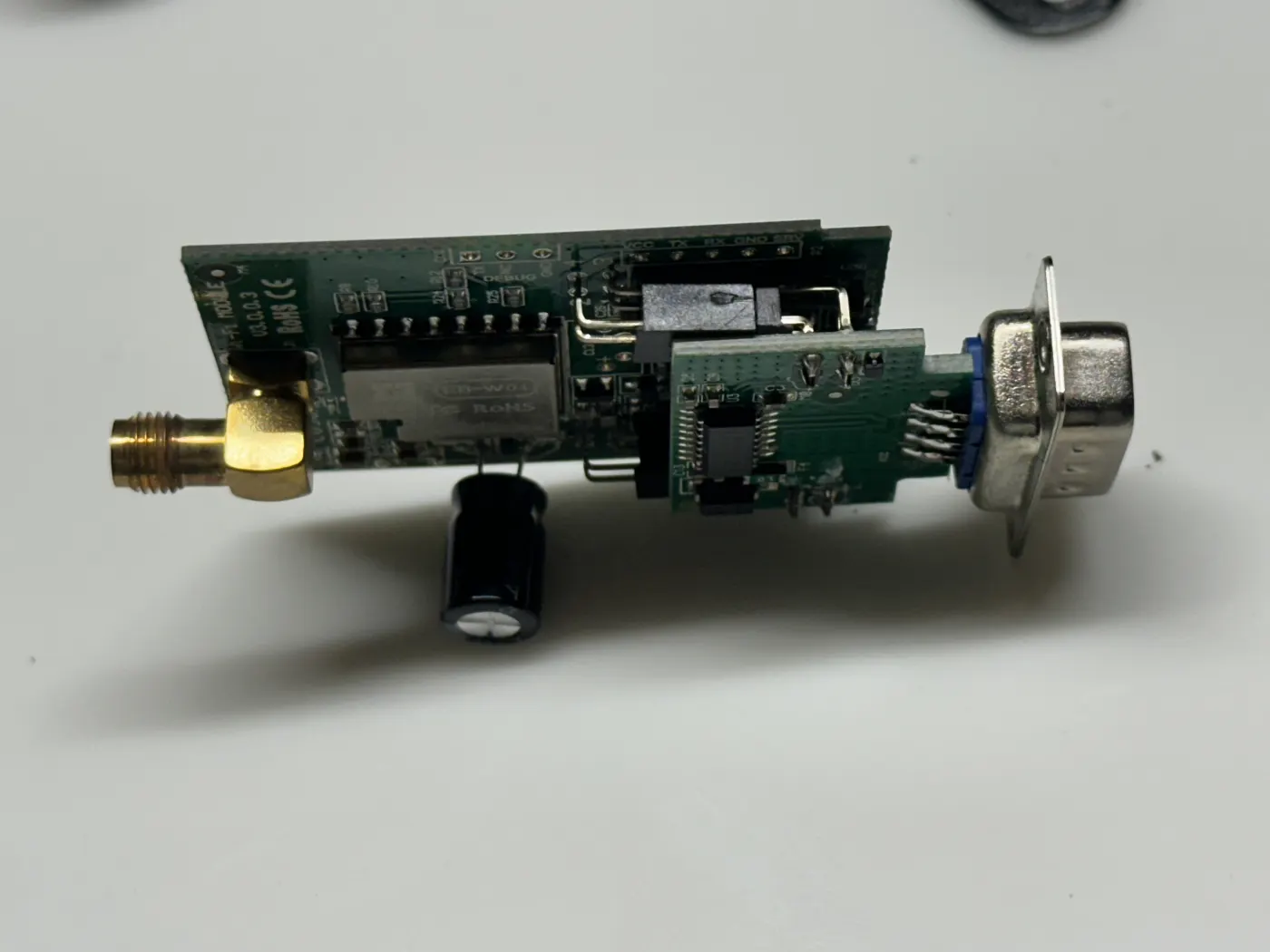
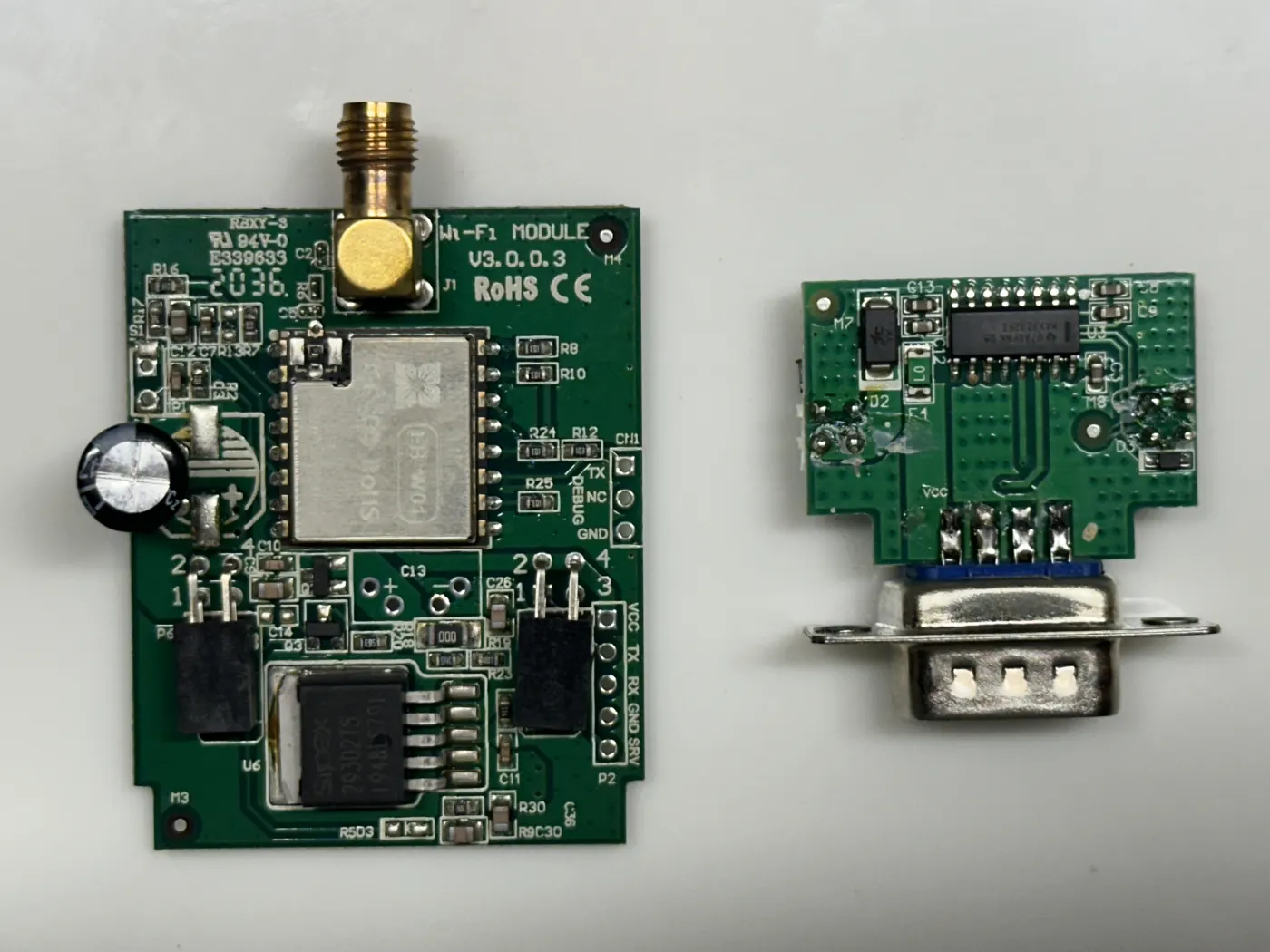
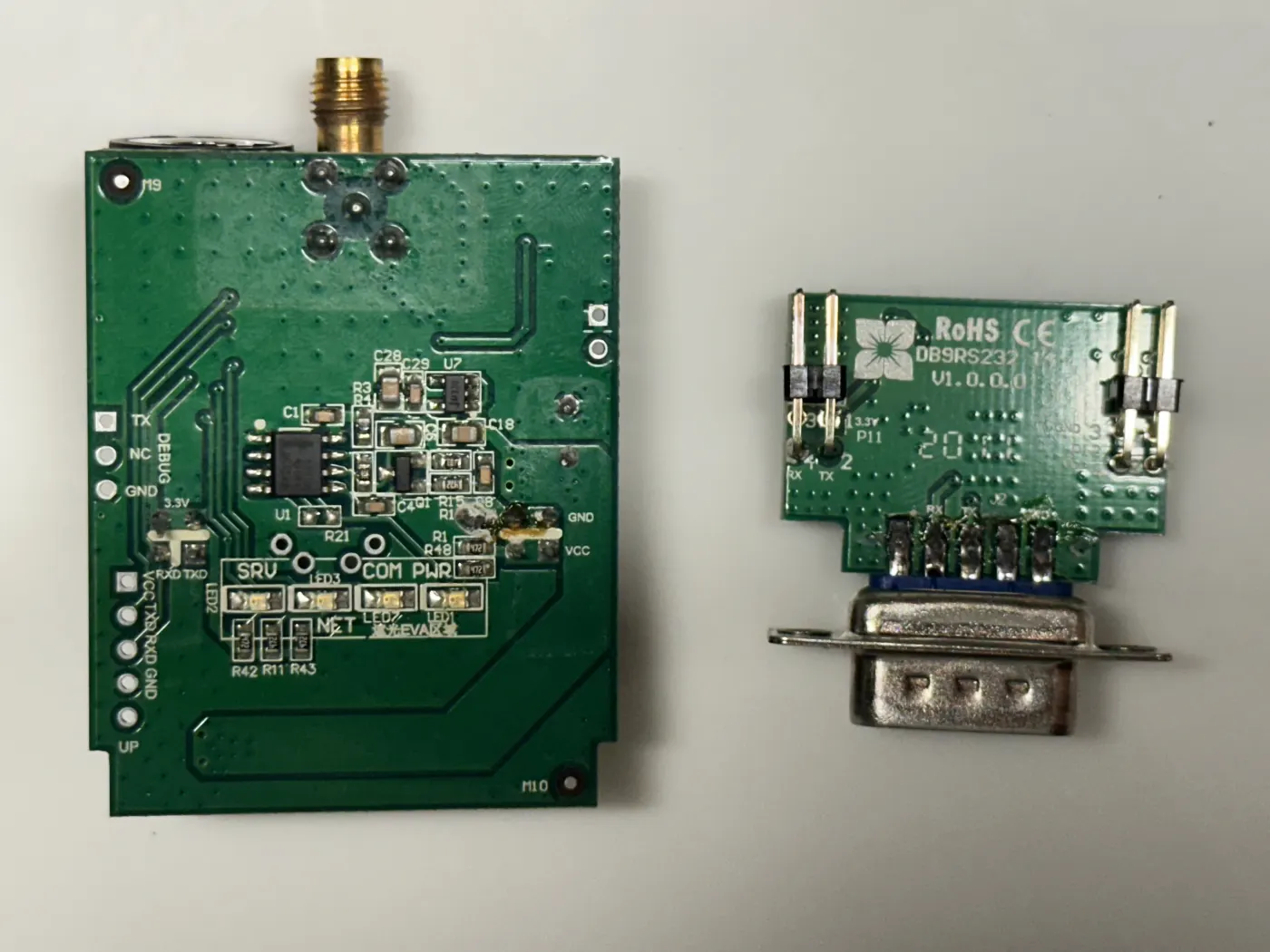
The main board is printed “Wi-Fi MODULE V3.0.0.3”. It carries the Wi-Fi module, the power supply, the four lights and the antenna socket. A second, smaller board, printed “DB9RS232 V1.0.0.0”, sits across one end on two pin headers and holds the 9-pin plug and the chip that talks to the inverter. Splitting the plug onto its own board would let one main board serve inverters with different ports, though we have only seen this one version.
The main board also has two sets of pads, one printed “DEBUG” with TX, NC and GND, and one with VCC, TXD, RXD and GND. They look like serial ports for the factory, and they are where we will listen next.
How a reading gets out
The logger has only two ways in or out, the 9-pin plug and the antenna. The inverter sends its readings out of its serial port as RS-232. On the plug board, the MAX3232E turns them into the low-voltage serial that the Wi-Fi module understands, and the module sends them over the home’s Wi-Fi to SOLARMAN’s servers, where the app picks them up. Settings and firmware updates travel the same path in the other direction.
Data
Power
There is no other power input, so the board has to draw its power from the inverter through the same plug. The regulator turns that supply into a steady one for the rest of the board. We haven’t yet measured which pins carry it or at what voltage.
The Wi-Fi module
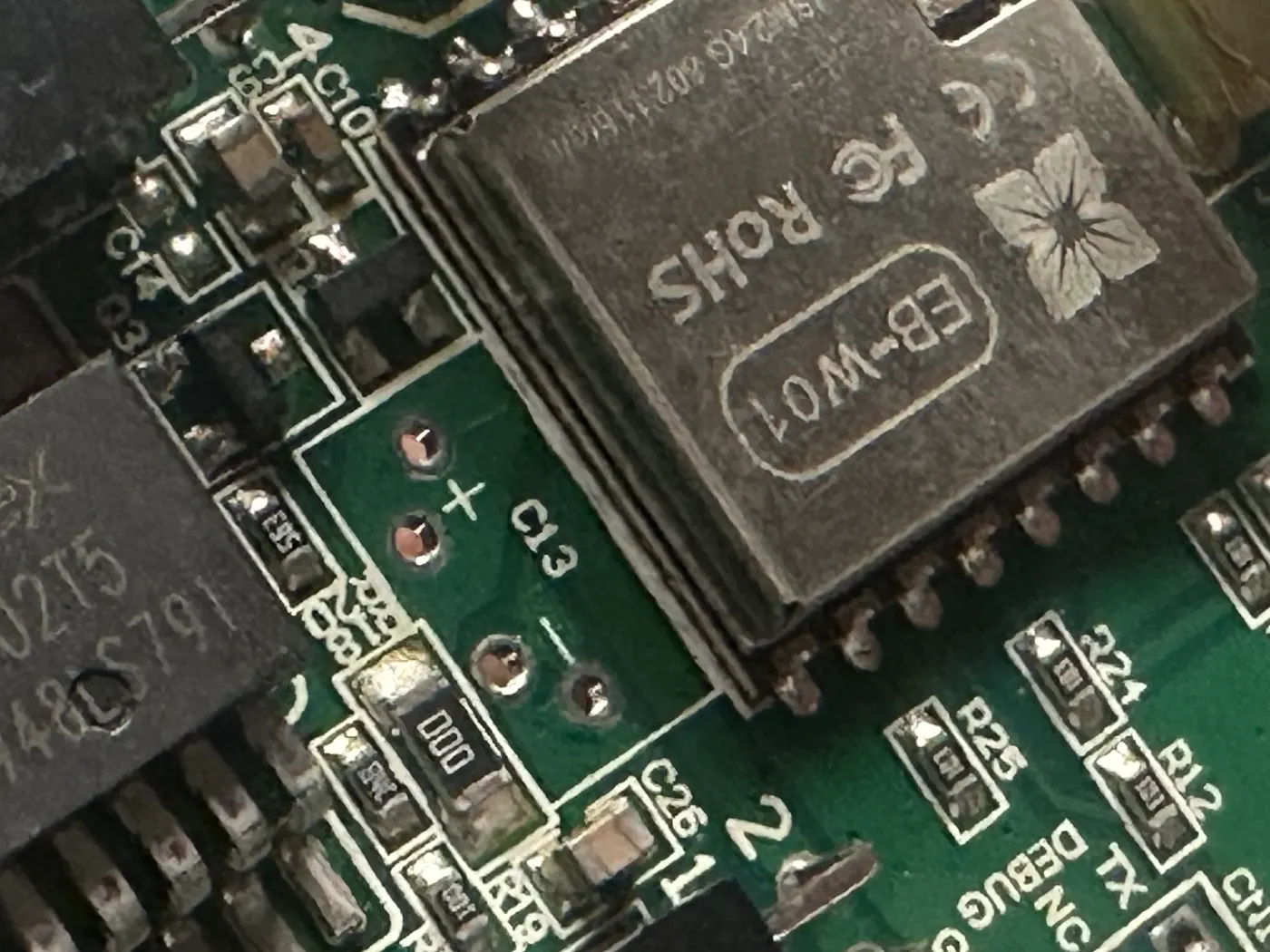
The part that matters most is the one we couldn’t name. The Wi-Fi module is a small board of its own, soldered to the main board along its edges and covered by a metal can engraved “EB-W01” with a flower logo and FCC and RoHS marks. Its antenna connection runs to the gold SMA socket, and the DEBUG pads sit right beside it.
We found no maker or datasheet for that marking. A module like this usually holds a Wi-Fi chip with its own processor, a flash memory chip for the firmware and a crystal, but which ones are inside this can we will only know once it comes off. Whatever they are, this is where SOLARMAN’s firmware runs: it reads the inverter over the serial line, joins the home Wi-Fi, decides what to send and where, and accepts settings and updates from the cloud.
The regulator
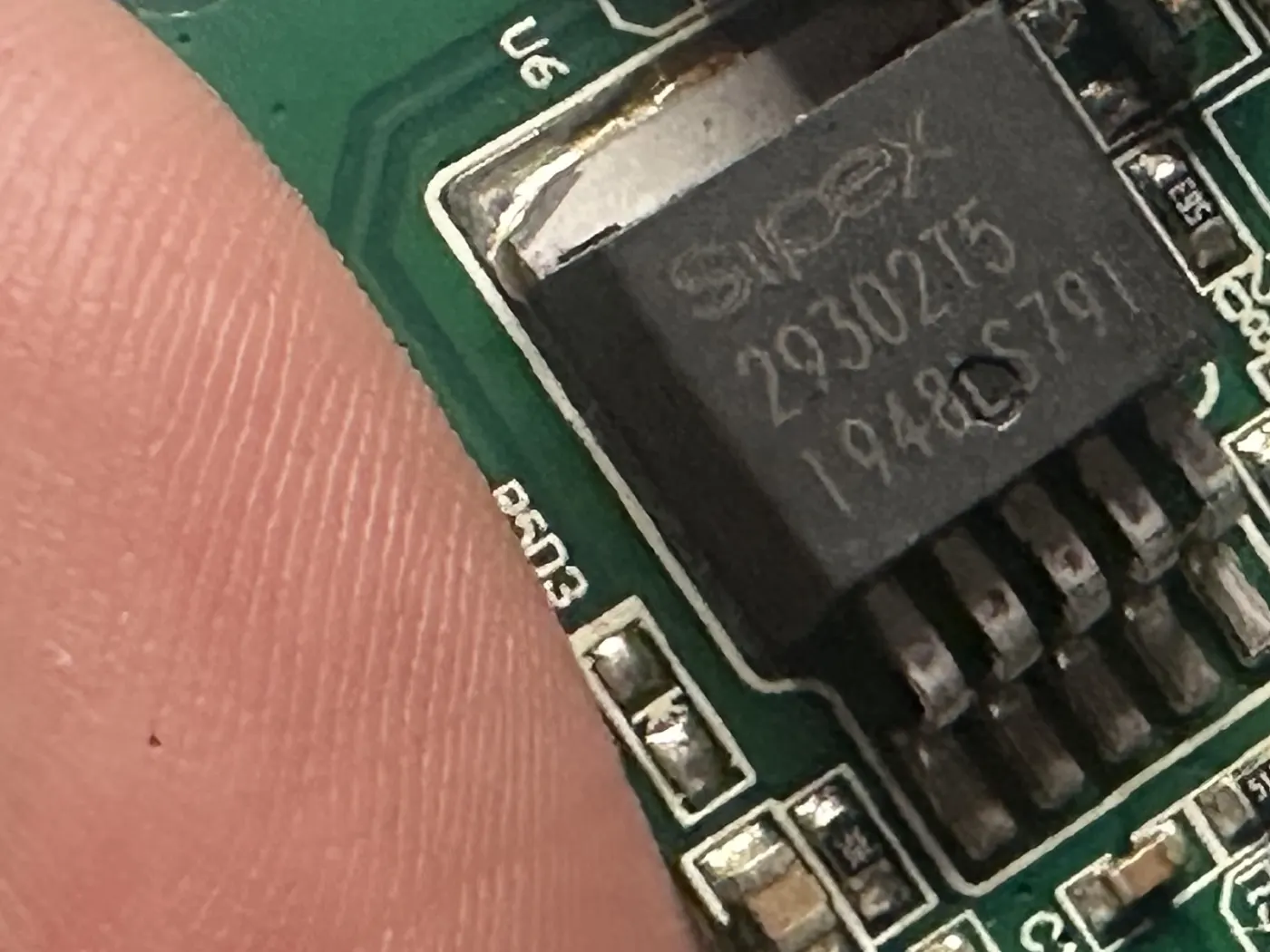
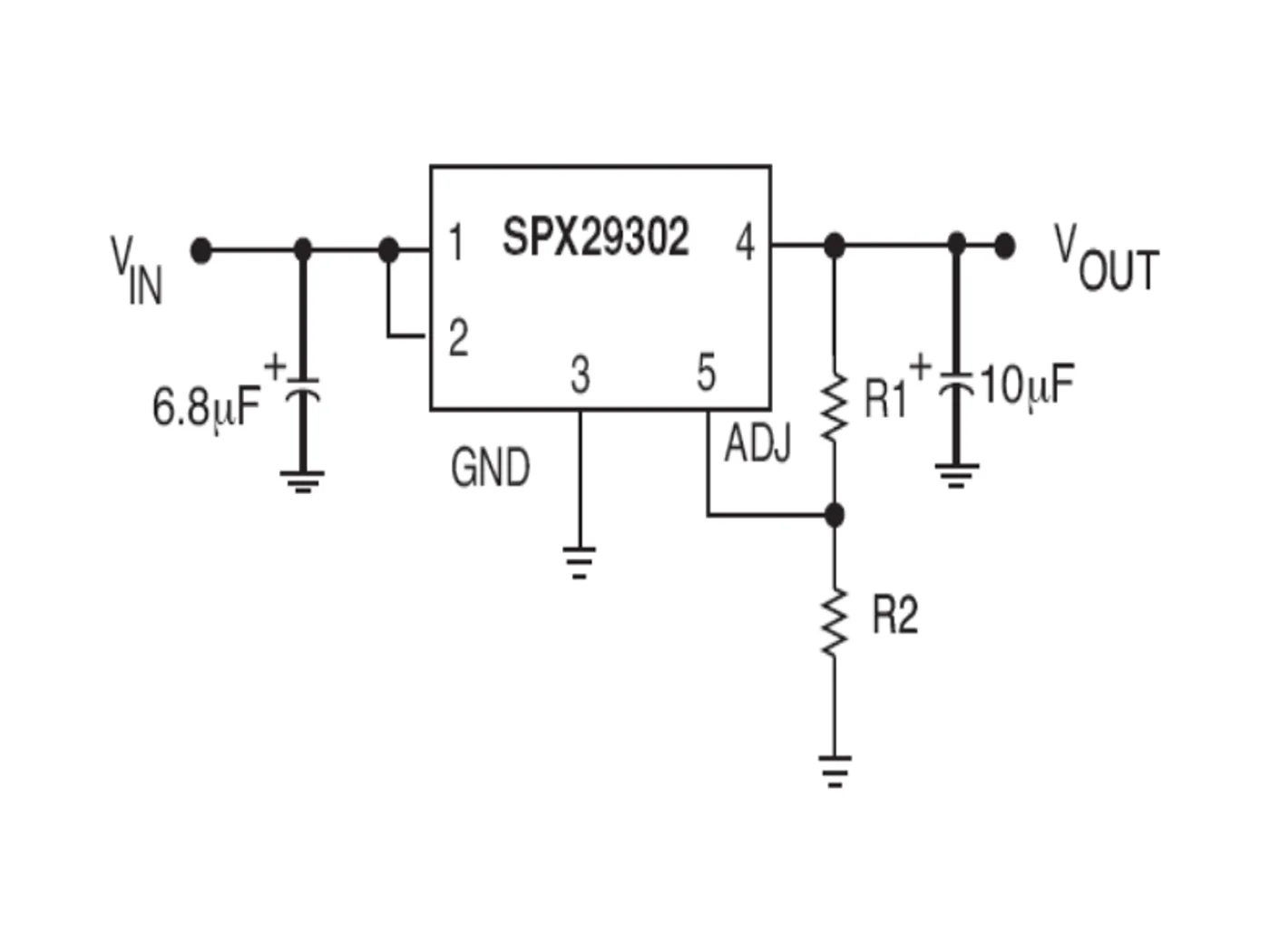
The largest chip on the main board is a Sipex SPX29302 (Sipex is now part of MaxLinear), a linear regulator. It takes a higher supply and gives out a steady lower one, turning the difference into heat, which is why it comes in a large five-pin package with a metal tab soldered to a copper pad on the board. It is a low-dropout type, which means it keeps working with the input only about 0.6 V above the output, and it is rated for 3 A.
This version is adjustable. Two resistors from the output to ground set the voltage at its ADJ pin, and the output works out to 1.24 V × (R1 + R2) ÷ R2, anywhere from 1.24 V up to 1 V below the input, with the input allowed up to 16 V. Its fifth pin, EN, switches it on and off. We haven’t measured what this board sets it to.
The RS-232 transceiver
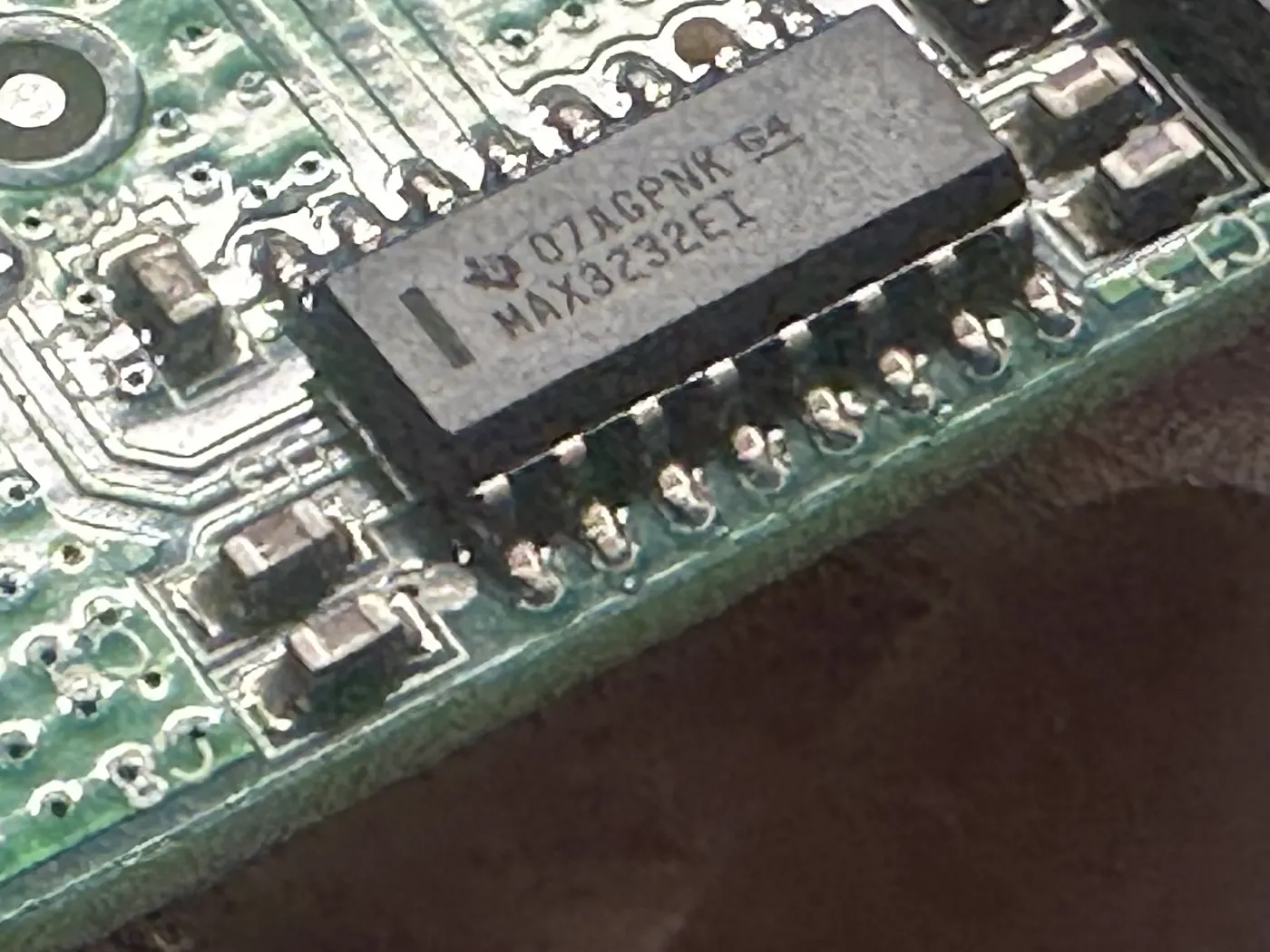
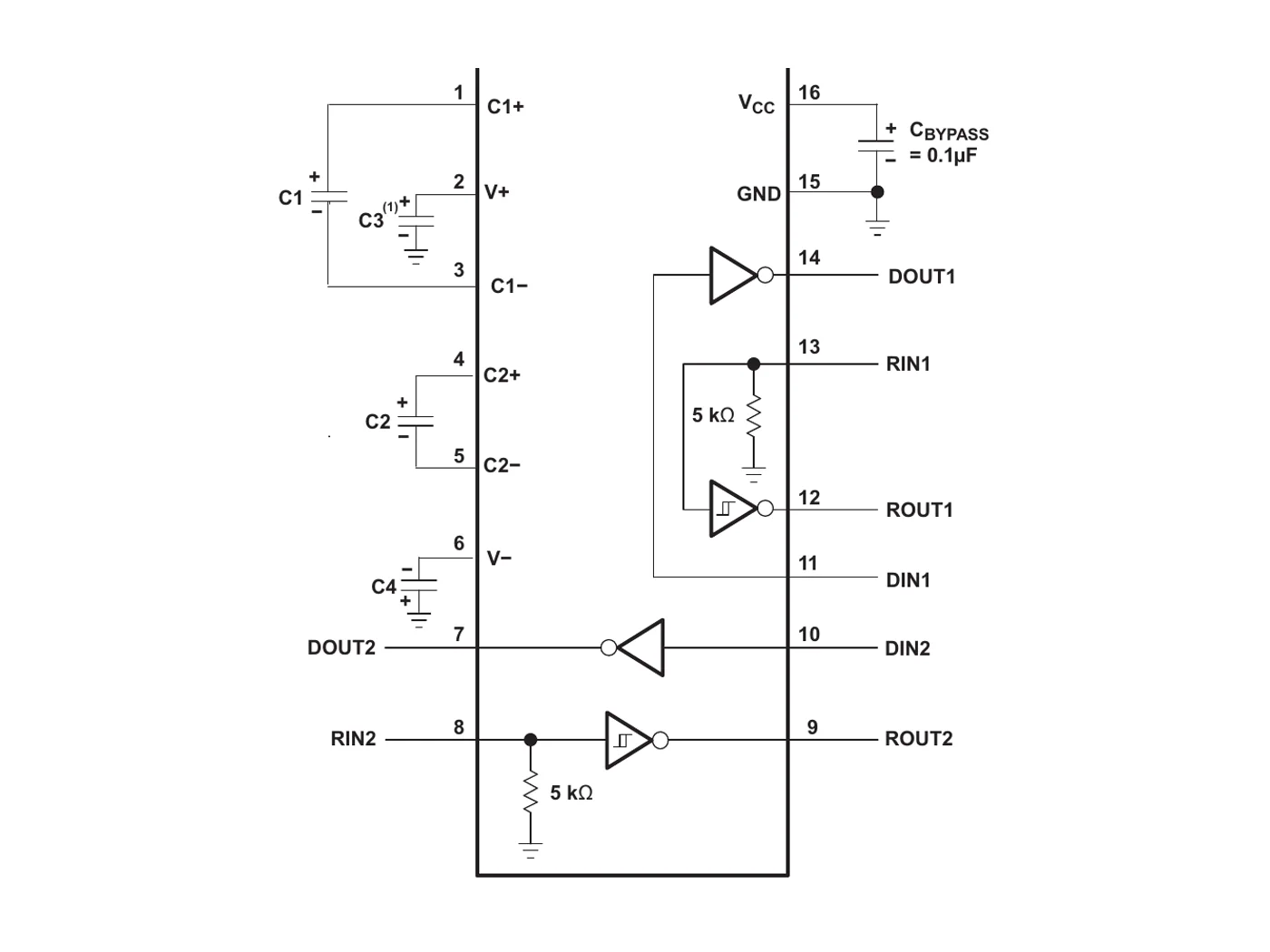
The plug board holds a Texas Instruments MAX3232E, the chip that lets a 3.3 V board talk to an RS-232 port. RS-232 needs voltages of several volts above and below zero, which the board doesn’t have, so the chip makes them itself with a charge pump: four small capacitors around it are switched to double the supply and turn it negative.
Inside are two drivers, which turn the module’s logic-level output into RS-232 for the inverter, and two receivers, which do the reverse. A logger needs only one of each to talk to an inverter, so the second pair is probably spare; we haven’t traced it. The chip runs from 3 V to 5.5 V, handles up to 250 kbit/s, and is protected to ±15 kV of static discharge on its port pins, which matters on a plug that people handle.
The 555 timer
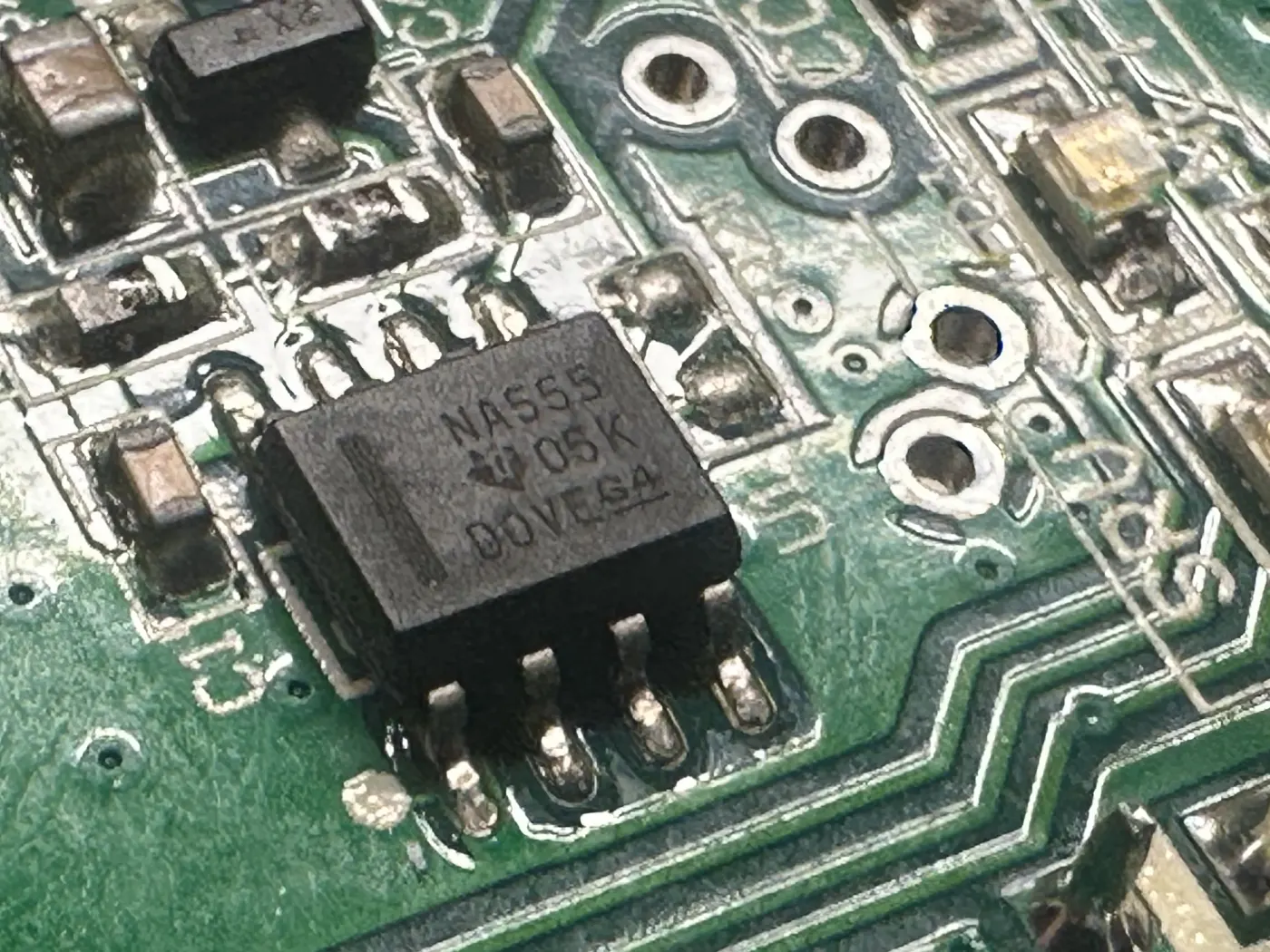
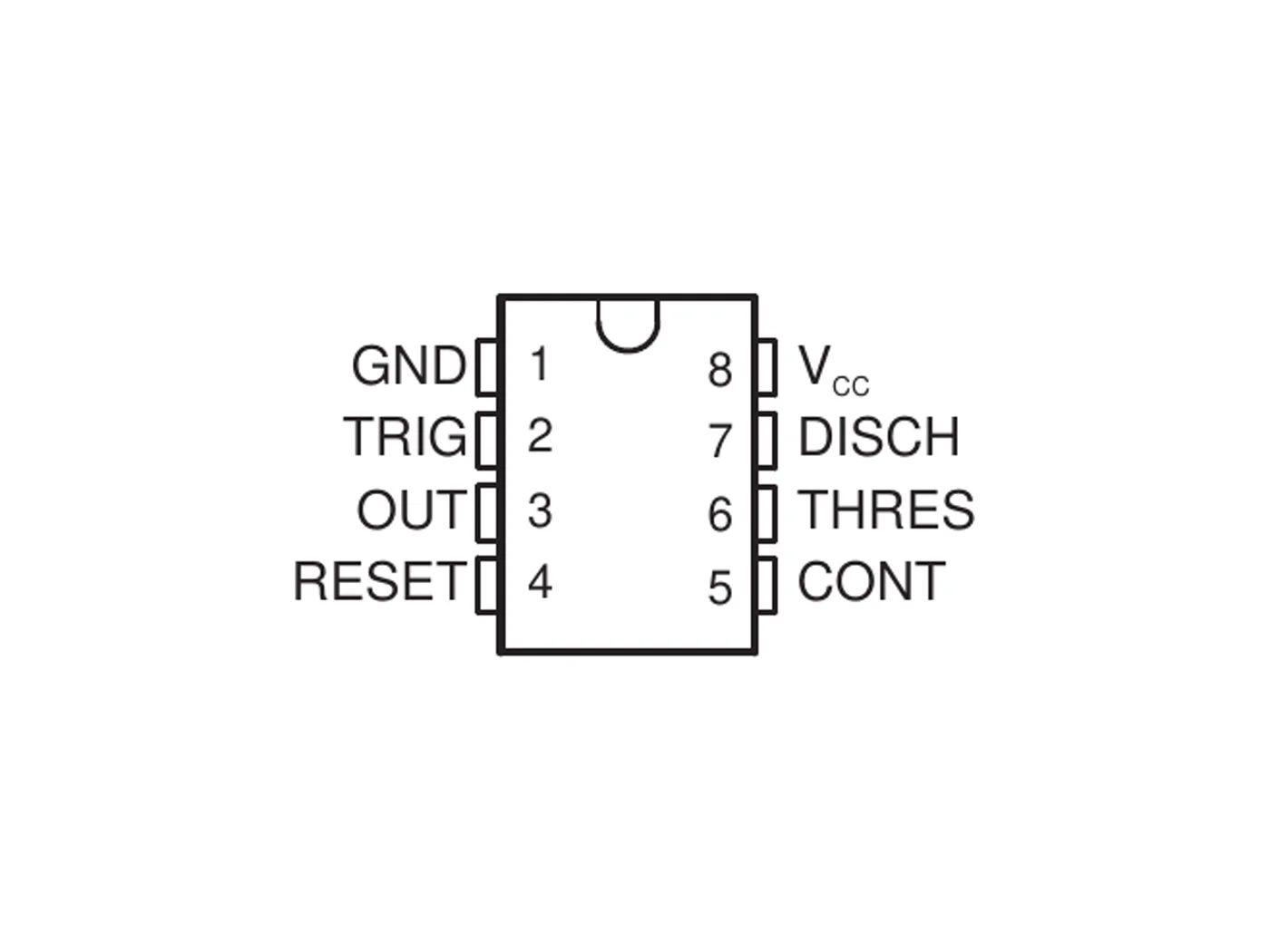
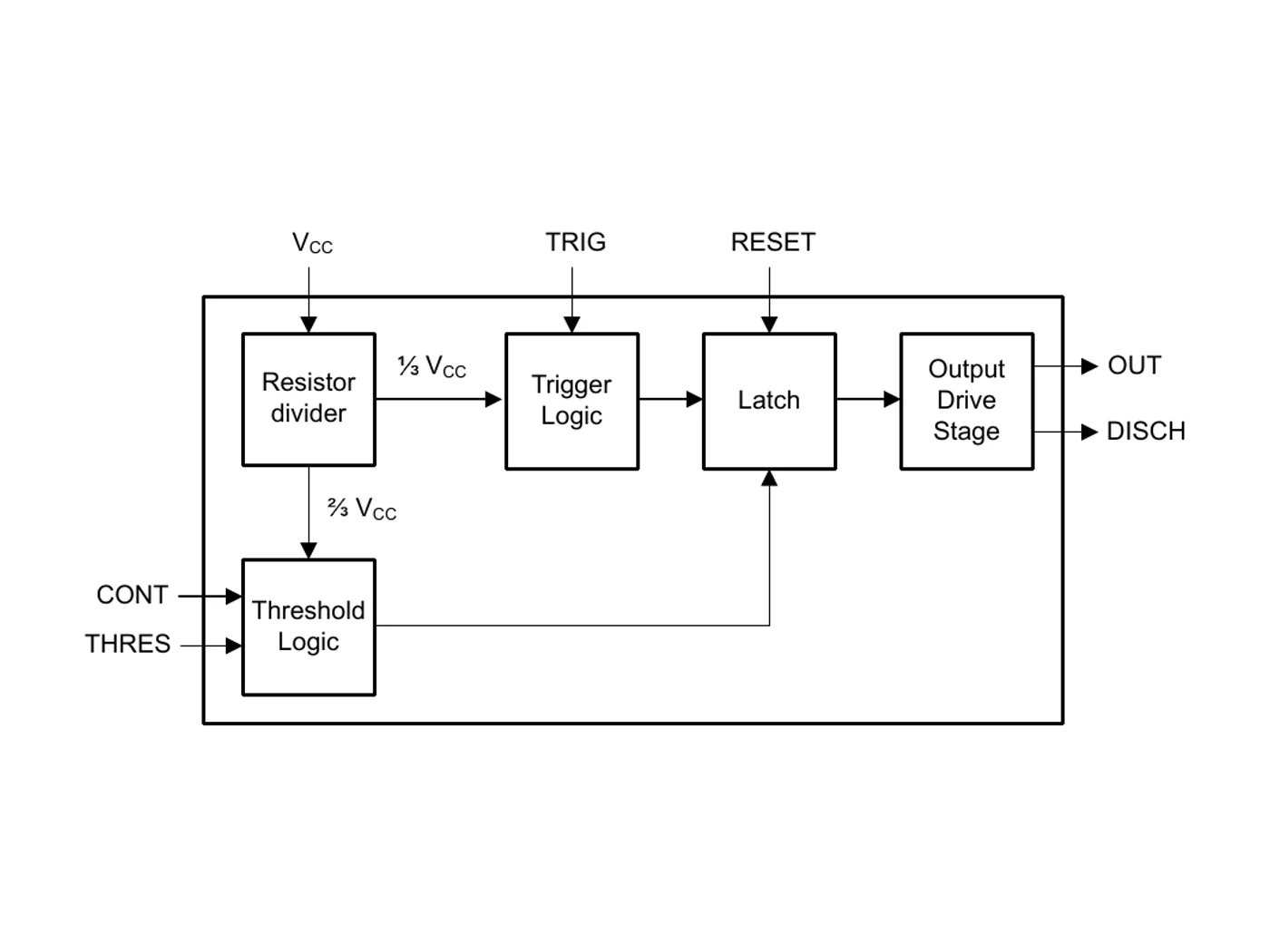
On the back of the main board is a Texas Instruments NA555, the industrial-temperature version of the 555 timer, rated for −40 to 105 °C. Inside, a chain of three resistors gives a third and two thirds of the supply voltage to two comparators. When the TRIG pin falls below a third, a latch sets and the output goes high; when THRES rises above two thirds, the latch resets, the output goes low and the DISCH pin empties the timing capacitor. With a resistor and a capacitor outside, that makes either a single timed pulse or a steady oscillation.
The NA555 needs at least 4.5 V and won’t run on 3.3 V, so it must sit on a higher supply than the logic side, most likely the one coming in from the inverter. What it does here we haven’t traced. A common use on boards like this is a watchdog that restarts the radio if it hangs, but that is a guess.
Parts list
| Part | Maker and job | Datasheet |
|---|---|---|
| Wi-Fi module, marked EB-W01 | Maker not identified. Runs the firmware, joins the home Wi-Fi and sends readings to the cloud | None found |
| Regulator, marked 29302T5 | Sipex, now MaxLinear. SPX29302, an adjustable 3 A low-dropout regulator that powers the board | SPX29302 |
| Transceiver, marked MAX3232EI | Texas Instruments. MAX3232E, two RS-232 drivers and two receivers between the inverter’s port and the board | MAX3232E |
| Timer, marked NA555 | Texas Instruments. A 555 timer rated for −40 to 105 °C | NA555 |
| Small part U7, marked JM320 | Not identified | None found |
What we saw and what we are guessing are kept apart here. The markings, the board names and the layout are as photographed, and the chips’ workings are from their datasheets. We haven’t measured any voltage or traced what the 555 timer or the spare transceiver pair does. The numbers 2036 on the main board and 1948 on the regulator look like year-and-week date codes, which would make the board from 2020, but we haven’t confirmed it.
What we don’t know yet
- Which SOLARMAN model this logger is, since its label has worn off
- Who makes the EB-W01 Wi-Fi module, and which chip is under its can
- What the logger sends over its debug pads, and what the 555 timer and the JM320 part do
Most inverters already speak a common language
| Register | What it holds | Unit |
|---|---|---|
| 32016 | Voltage of panel string 1 | 0.1 V |
| 32017 | Current of panel string 1 | 0.01 A |
| 32018 | Voltage of panel string 2 | 0.1 V |
| 32019 | Current of panel string 2 | 0.01 A |
An inverter keeps its readings in numbered slots called registers and answers questions about them over Modbus, a protocol from 1979. The table above is part of Huawei’s public register map; with a brand’s map in hand, any logger can read that inverter.
The closed brands are mostly Indian
Published 12
- GoodWe China
- Huawei China
- Sungrow China
- Growatt China
- Sofar China
- Solis China
- APsystems China
- SMA Germany
- Fronius Austria
- FIMER Italy
- Delta Taiwan
- Waaree India
Not published 7
- Luminous India
- Microtek India
- Su-Kam India
- UTL India
- Mindra India
- TMEIC Japan
- Enphase US
An open Indian logger can read most Chinese and European inverters today, but not most Indian ones. A closed map doesn’t mean anything is hidden; it means someone has to ask the maker, or listen in on the cable and work it out.
Why it’s a national security threat
Whoever runs a logger’s cloud can switch the inverter behind it off from afar, because the same link that carries settings and firmware updates down to the roof can carry a shutdown command. Each of the big monitoring apps has more than 10 lakh downloads, so a single cloud can reach lakhs of roofs at once. In November 2024, Deye inverters sold outside the company’s authorised channels in the US and elsewhere stopped working and showed an error message; Deye denied sending any command, and it still hasn’t been settled who did.
Hidden spy radios are a different matter. In May 2025 Reuters reported that US experts had found undocumented radios in some Chinese inverters, but the makers weren’t named and no findings have been published, so we treat it as a report worth following rather than something we can claim.
How this is tackled globally
Lithuania has banned remote access by manufacturers from threat countries for systems above 100 kW (Nov 2024). Since May 2026 the EU no longer funds projects that use inverters from high-risk suppliers, China among them. In the US, the DOE inspected around 30 inverters and found no definitive evidence.
The logger is a good place for India to start
India’s new rules, starting with MNRE’s draft rules for loggers in July 2025, cover where the data goes, how loggers are tested and how they connect. They don’t yet cover who makes the chips or the firmware; there is no approved-maker list for loggers and no rule on where either comes from.
The logger is a small, cheap board, and some of its pieces already exist here. DATOMS and Xeeed run their own firmware on clouds hosted in India, Cavli designs cellular modules and Mindgrove makes chips, though each would still have to meet MNRE’s and CEA’s rules.
India's rules are catching up
- 27 Mar 2026 Testing rules for loggers
- 1 Apr 2026 Draft firmware rules
- 31 Jul 2026 CEA cyber rules notified
- 17 Aug 2026 Data must stay in India
- 1 Apr 2027 CEA cyber rules come into force
Further reading
Where you could help
- Firmware engineers who can read an inverter's Modbus registers and write logger firmware
- PCB designers to lay out an open logger board around Indian modules
- Backend developers to build a cloud that keeps the data in India
- Hackers who own a rooftop system and can capture what their logger sends
- Owners of Luminous, Microtek or UTL inverters who can listen in on the RS-485 line and help map its registers
- Researchers to keep track of MNRE and CEA rules and supplier claims