
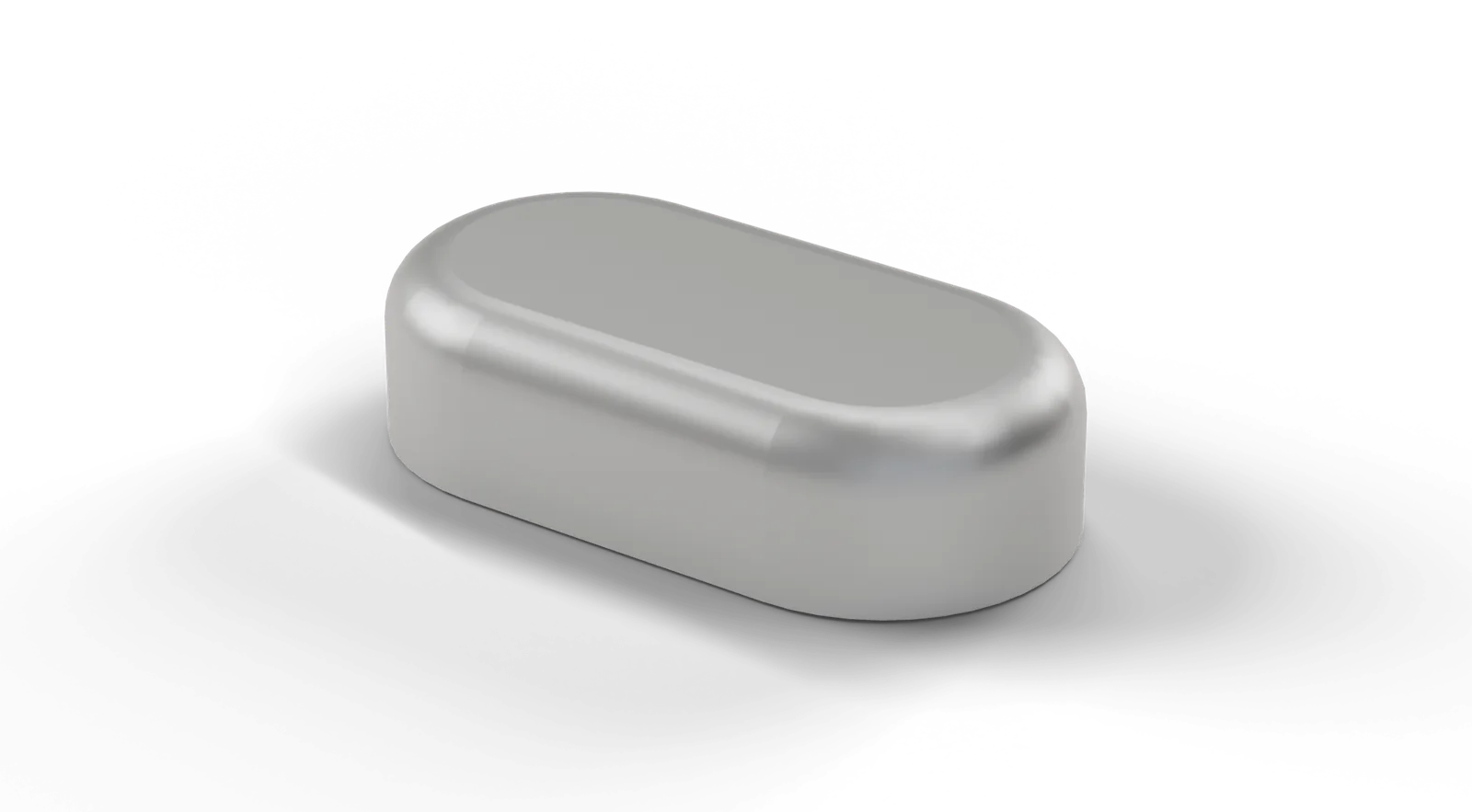
Atrium is a pod of 1.07 cubic centimetres that sits on the temple, just behind the eye, and reads the skin with light and motion. It is designed to keep track of pulse, heart rate variability, skin temperature and sleep through the day and night, hold its own log, and sync with a phone over Bluetooth.
Local Forge designed it in Ahmedabad and has published everything that defines it, from the schematics and board layouts to the enclosure CAD, the simulations behind each number, the firmware and the app, so that anyone can study it, build it or make it better. The design is finished and the production files are ready; the first ten pods have not been built yet, so every figure on this page is a design value or a simulation unless it says otherwise.
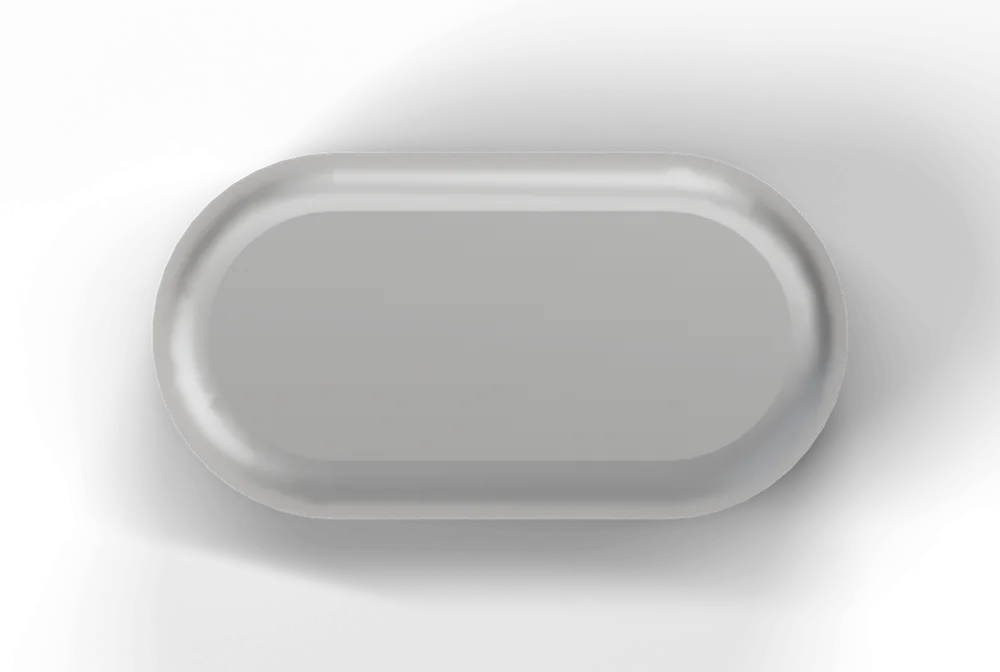
- 20.9 mm long, 11 mm wide and 5.3 mm thick
- 1.07 cm³ in all, shell included
- 30 mAh cell, charged on a magnetic Plinth
- ~4 days on a charge in the default mode, estimated
Pulse, temperature and sleep from one spot on the temple
The pod carries one optical module with green, red and infrared lights and a light detector, a motion sensor, and two small temperature sensors, one against the skin and one inside. Everything it reports is built from those four, and each reading is planned for a particular build, so that nothing appears in the app before it has been checked.
Heart rate
Live and through the day, from the green light, with motion taken out using the motion sensor.
First build
Skin temperature
Each night’s change from your own usual, read by the sensor against the skin. A trend, never a body temperature.
First build
Oxygen trend
A relative overnight trend from the red and infrared lights, for research. It never shows an oxygen percentage.
First build
Heart rate variability
The nightly beat-to-beat measure called RMSSD, taken only in still moments.
First release
Sleep
How long and when you slept, with an estimate of stages, labelled as an estimate.
First release
Activity and recovery
Active minutes, an effort score and a morning recovery score, each with its formula documented.
First release
Atrium is a wellness and research device. It makes no medical claim, shows no blood-oxygen number and makes no claim about the brain; the reason for the last of these is further down this page.
Why the temple
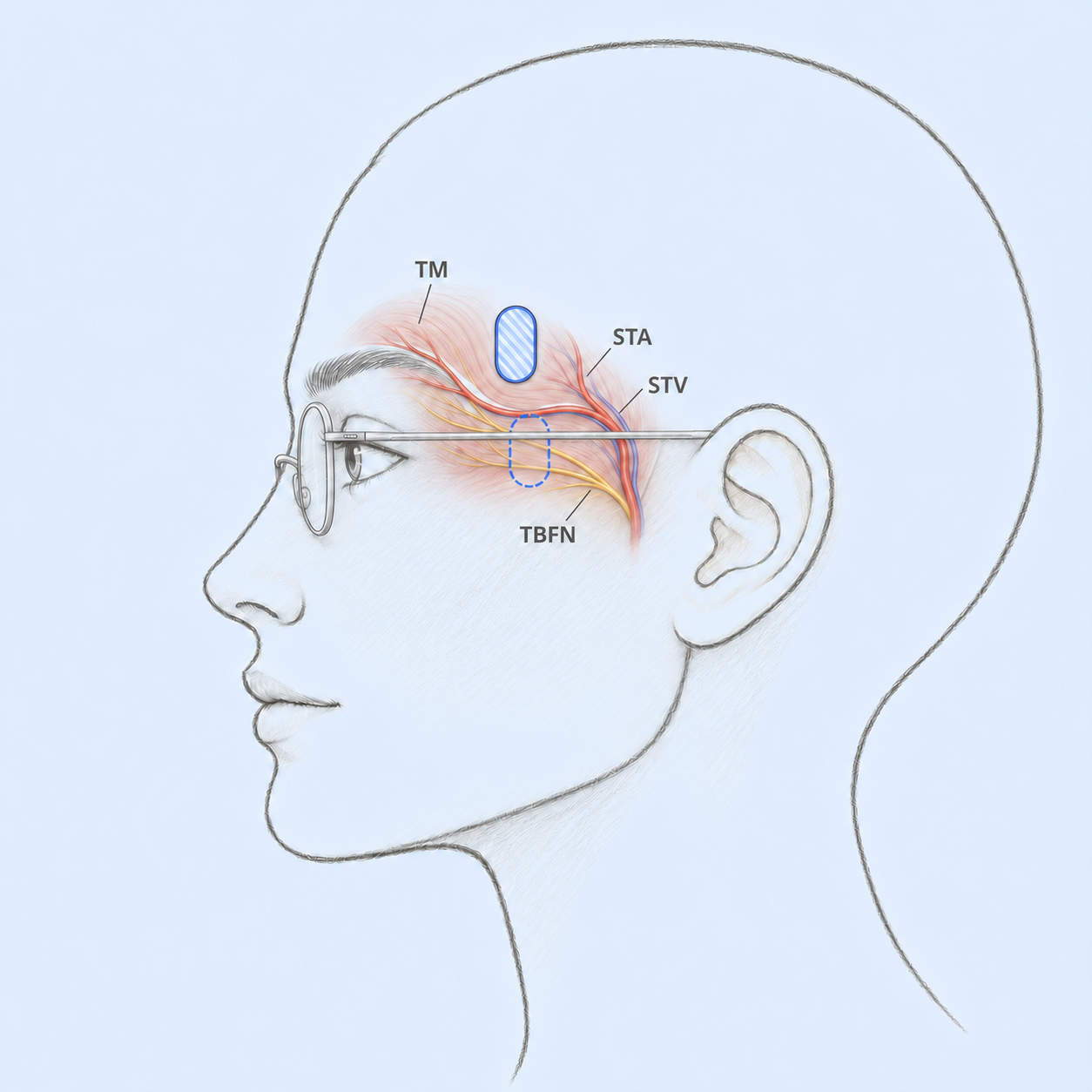
The skin at the temple is thin and the head moves less than the wrist, which suits an optical sensor that has to keep working through a night of sleep. The pod sits upright in the temporal hollow, the flat just above the cheekbone and a thumb-width behind the outer corner of the eye, clear of the hairline. The signal there is expected to come from a bed of small vessels fed by several branches of the superficial temporal artery, drawn in red below, so a good reading does not depend on landing over one thin vessel.
A glasses arm runs straight through that spot. People who wear glasses place the pod higher instead, level with the eyebrow, so the arm passes just underneath it; in the drawing, the outline marks the lower spot behind the glasses arm, and the filled pod shows the higher position clear of it. Either way, the app guides the last few millimetres with a live reading of signal quality.

Everything inside, in 1.07 cubic centimetres
Seven layers make up the pod. The cell sits in the middle, the electronics are split between two small boards in the rounded ends, and a thin flexible circuit runs under the cell to join them and to carry the charging contacts out to the skin side.
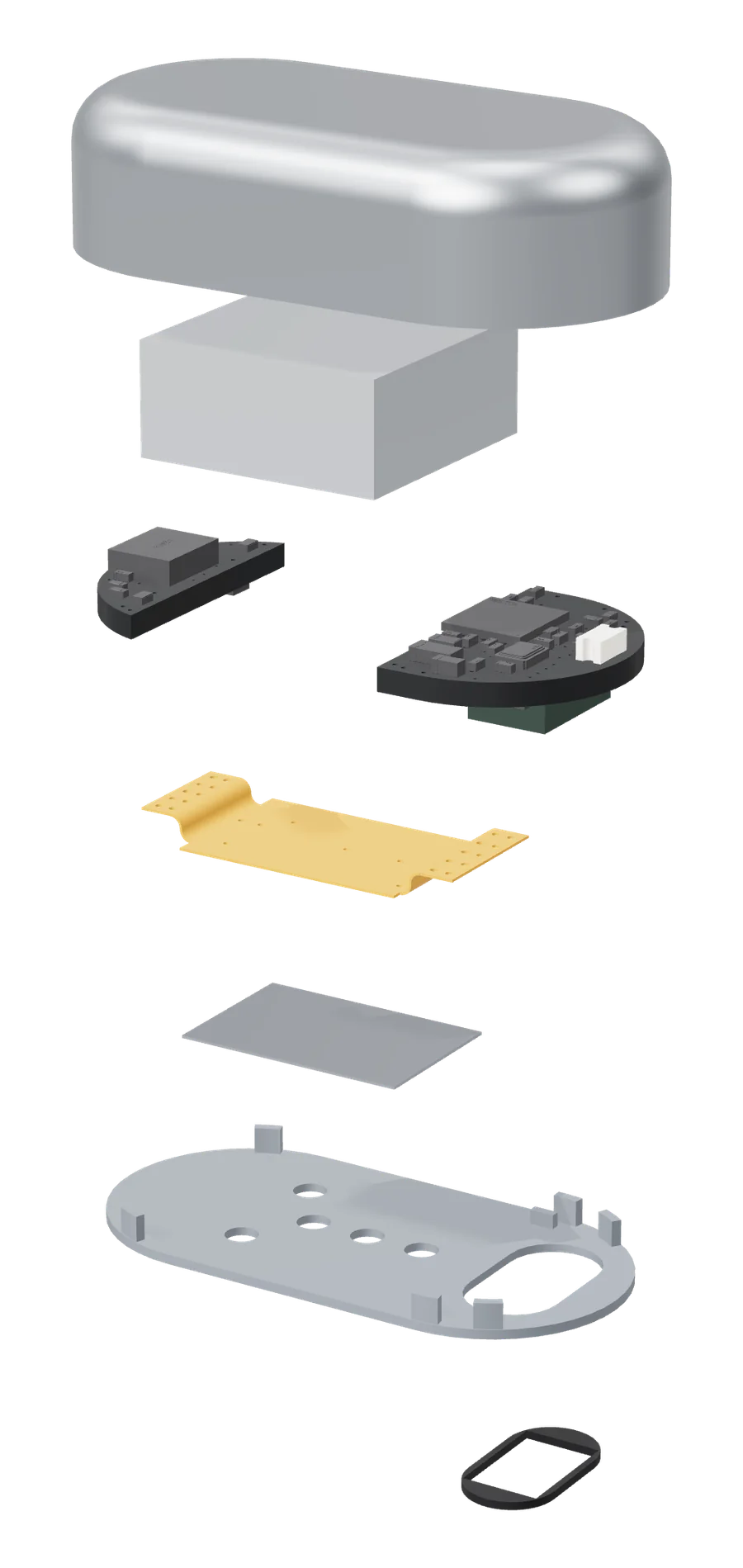
- Shell Satin silver polycarbonate with a finish that lets the radio through
- 30 mAh cell 9 × 9 × 4 mm, in the middle of the pod
- Radio and power islands Two six-layer boards in the rounded ends; the optical module sits under the radio island
- Flex Joins the islands under the cell and carries the charging contacts
- Steel stiffener 0.1 mm, for the Plinth's magnets to pull on
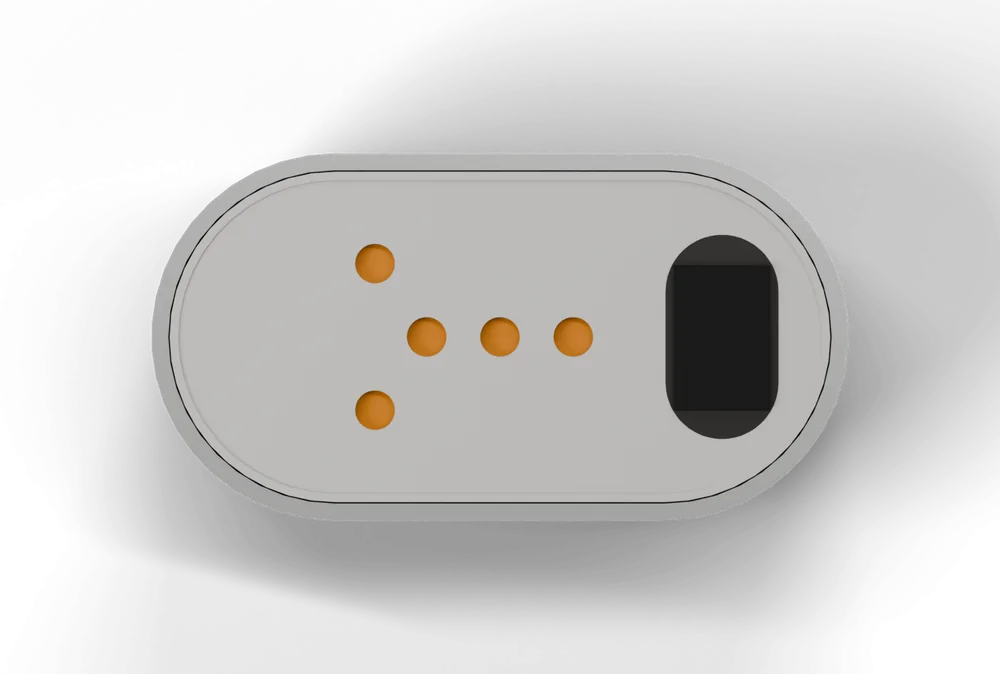
- Base 0.35 mm, with the window, five contact holes and a bed for the skin pad
- Window gasket Black silicone round the optical module
Iterations
The first design put everything on one four-layer board, with separate LEDs and two light detectors, and it was too large to wear on the head. Merging the lights and the detector into one module took out many parts, and dividing the electronics between the two rounded ends, with the cell between them, made the rest fit: a 19.4 mm version left about 20 components without a place, while at 20.9 mm all 64 have one. A cell made to the shape of the shell is expected to shrink the next version further.
First design (Rev B.1) 30 × 16 × 7 mm
Atrium today 20.9 × 11 × 5.3 mm
Next version, planned About 17 mm long
Two six-layer boards and a flex
Four layers could not reach every connection under the radio chip, whose solder balls are 0.4 mm apart, so each board is a six-layer stack only 0.82 mm thick. Both were routed by hand with the radio path first: a 50 Ω feed runs to a chip antenna at the tip of the pod, in a zone kept free of copper on every layer. One panel carries both boards for 20 pods, so a first build is a single order.
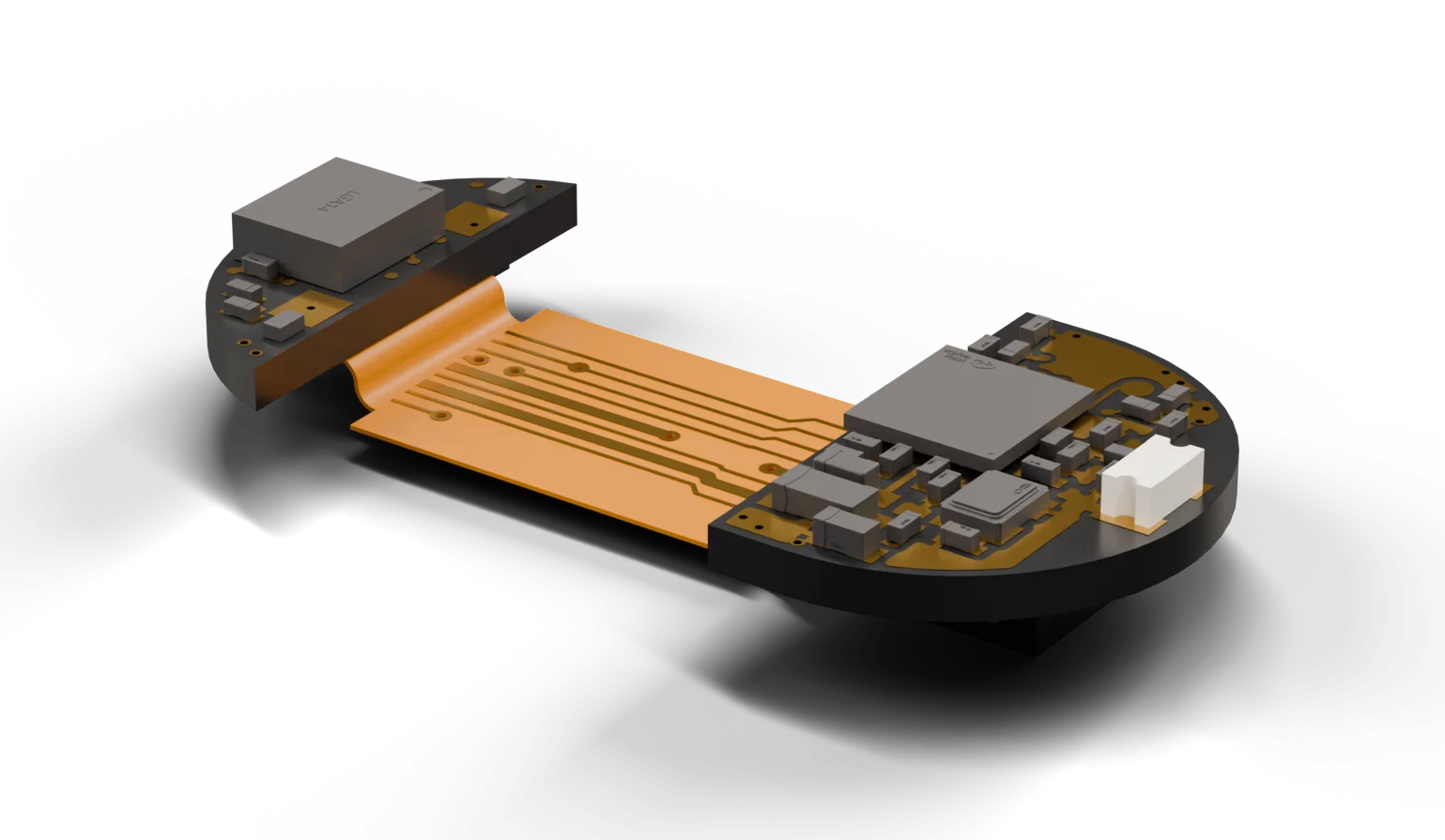
Each island is held at its edge between posts in the base and ribs in the shell, which also holds the optical module down against its window. The board files have passed their design-rule checks with no errors on both islands and the panel; the few items left on the flex and the charging-case board are listed and explained in the repository.
Most of its 5.3 mm is battery
The 4.0 mm cell sets the depth of the pod and leaves 1.3 mm for everything else, including a 0.2 mm gap above the cell for the swelling a lithium cell can show as it ages. A 0.15 mm skin pad sits in a shallow bed in the base, so the adhesive stays out of sight.
 20.9 mm 11 mm
- 0.5 mm Top wall
- 0.2 mm Gap for swelling
- 4 mm 30 mAh cell
- 0.25 mm Stiffener, flex and bond
- 0.35 mm Base
Most of the power goes to light
The pod is budgeted at 189 µA on average, and almost half of that goes to the optical module. The green light normally samples 25 times a second; for one minute in every five it runs at 100 to time beats closely, and while you sleep the red and infrared lights take a 30 second reading every five minutes for the oxygen trend. With a new cell that budget gives between 3.6 and 8 days in simulation, and the app plans conservatively on about four days in the default mode until the first pods have been measured.
189 µA on average
- Optics: the LEDs and their front end 86 µA
- Processor and Bluetooth 59 µA
- Motion sensing 39.5 µA
- Everything else 4.7 µA
Days on a charge
Timing beats at 25 samples a second
Heart rate variability is the small change in time from one beat to the next, so it needs each beat timed to within a few milliseconds. Sampling faster would cost light, and light is the largest item in the budget, so the firmware instead estimates where each peak falls between two samples. In simulation that brings the error at 25 samples a second from 12.7 ms to 2.1 ms, close to what 100 samples a second gives without it.
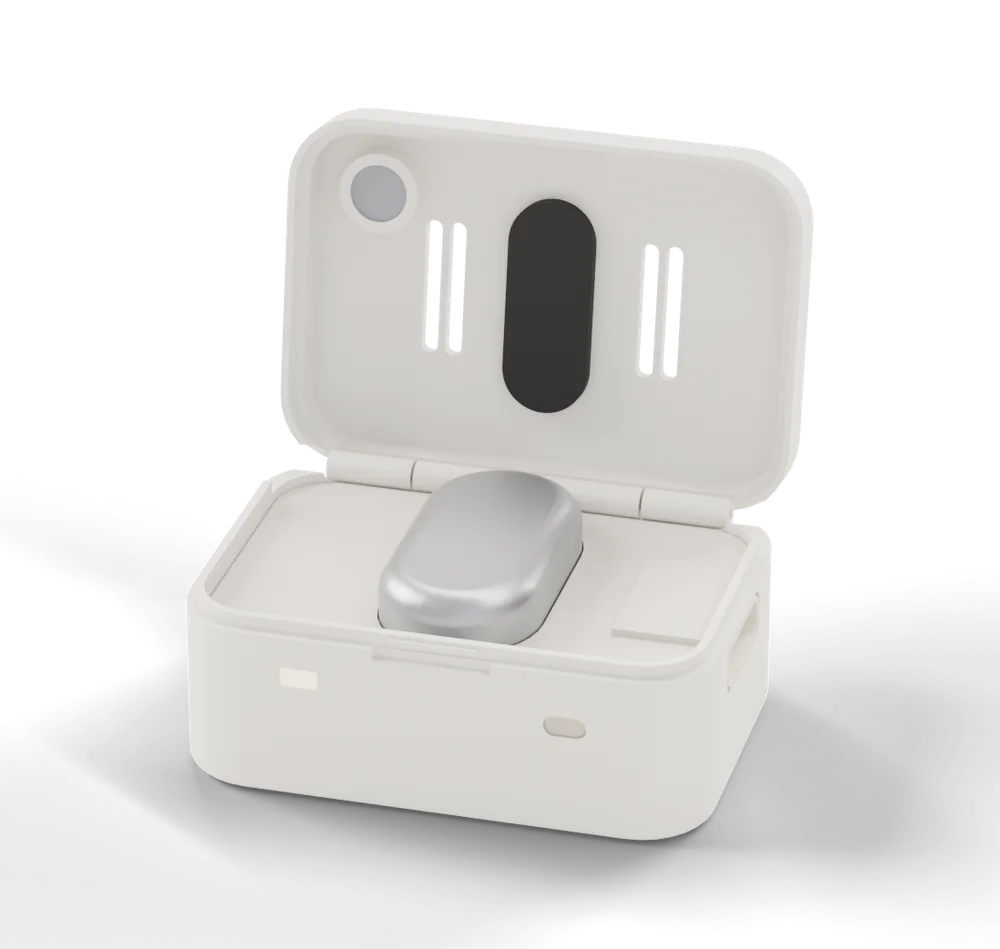
Charged on a Plinth, carried in a case
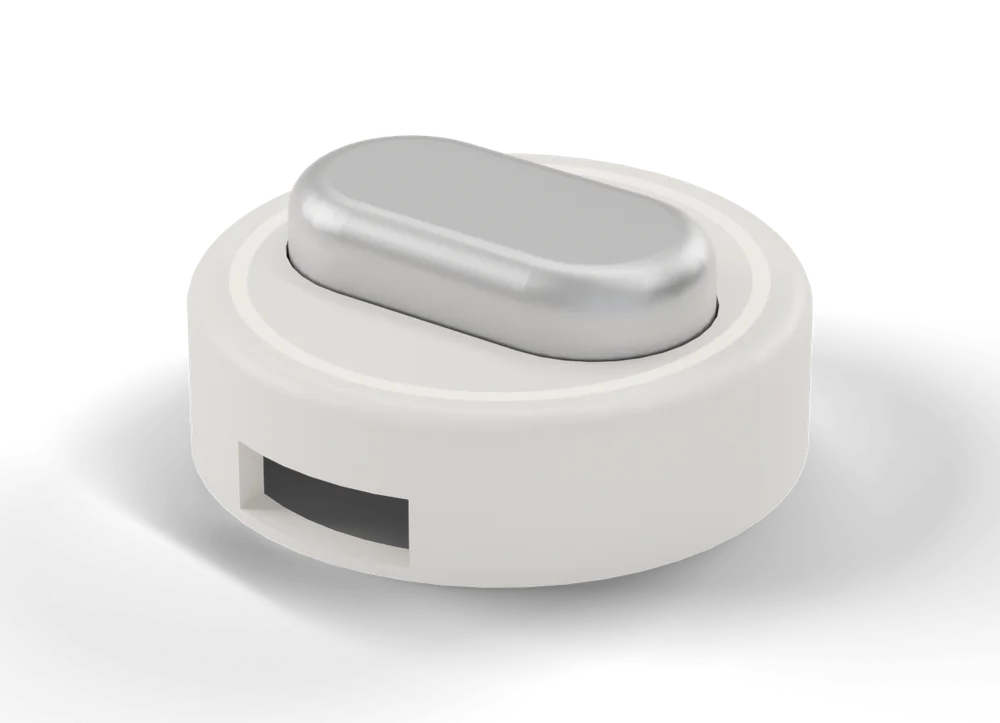
The charging contacts sit on the skin side, with power in the middle and ground on either side, so the magnetic Plinth charges the pod whichever way round it is placed. Two magnets pull on the steel stiffener to seat it on two spring pins. The skin pad covers the contacts, so it comes off before charging, and the app reminds you at the same time to put on a fresh one. In simulation the pod charges to 80% in about 96 minutes, and the pocket case is expected to hold about eight full charges.
An app that keeps your data on your phone
The app for Android and iOS needs no account and no server, and readings travel from the pod to the phone and stay there; any cloud feature added later will be opt-in. It guides the fit with a live pulse and a signal bar, then shows each reading against your own usual rather than against an average. A demo build that runs on sample data can be downloaded today.
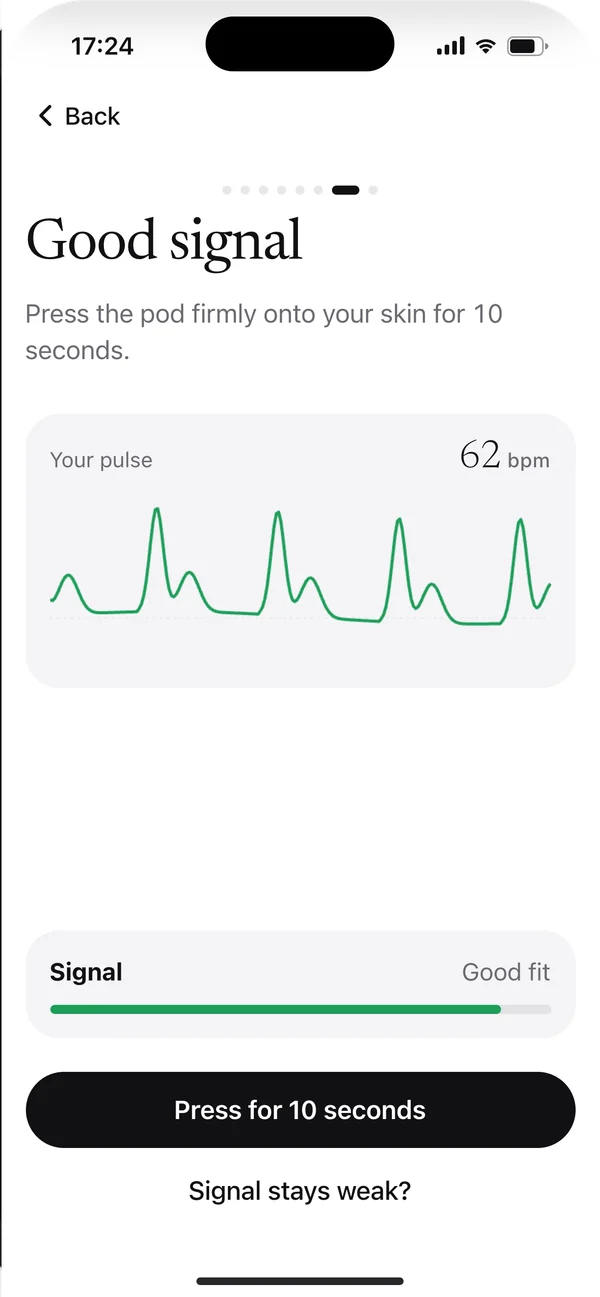
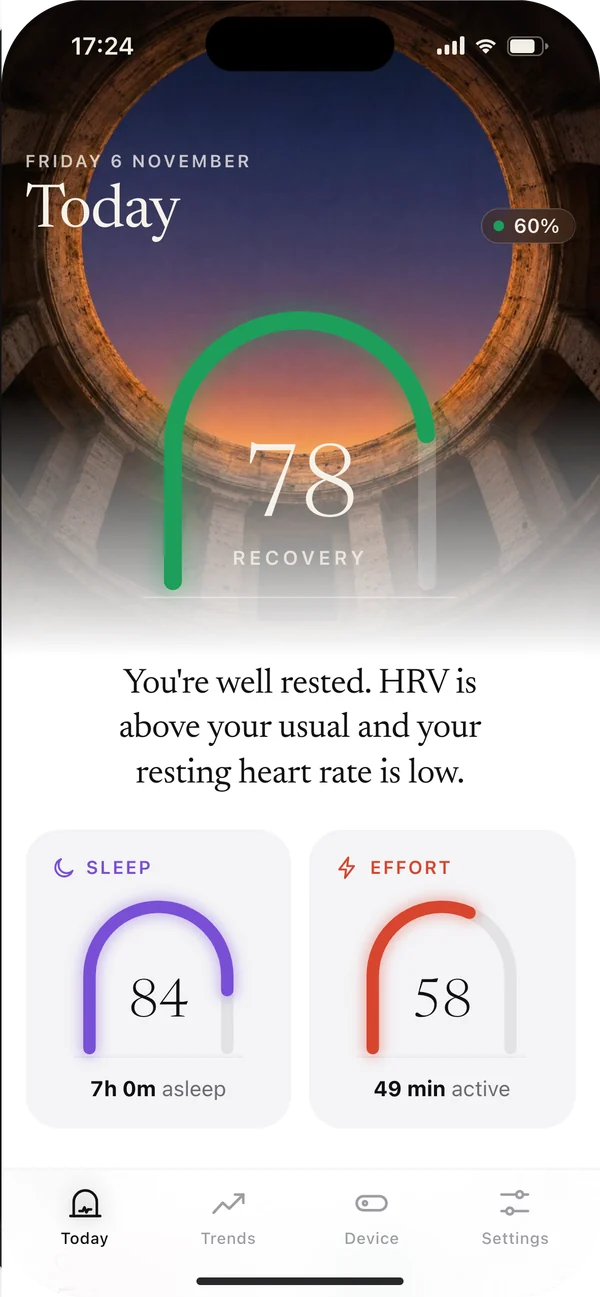
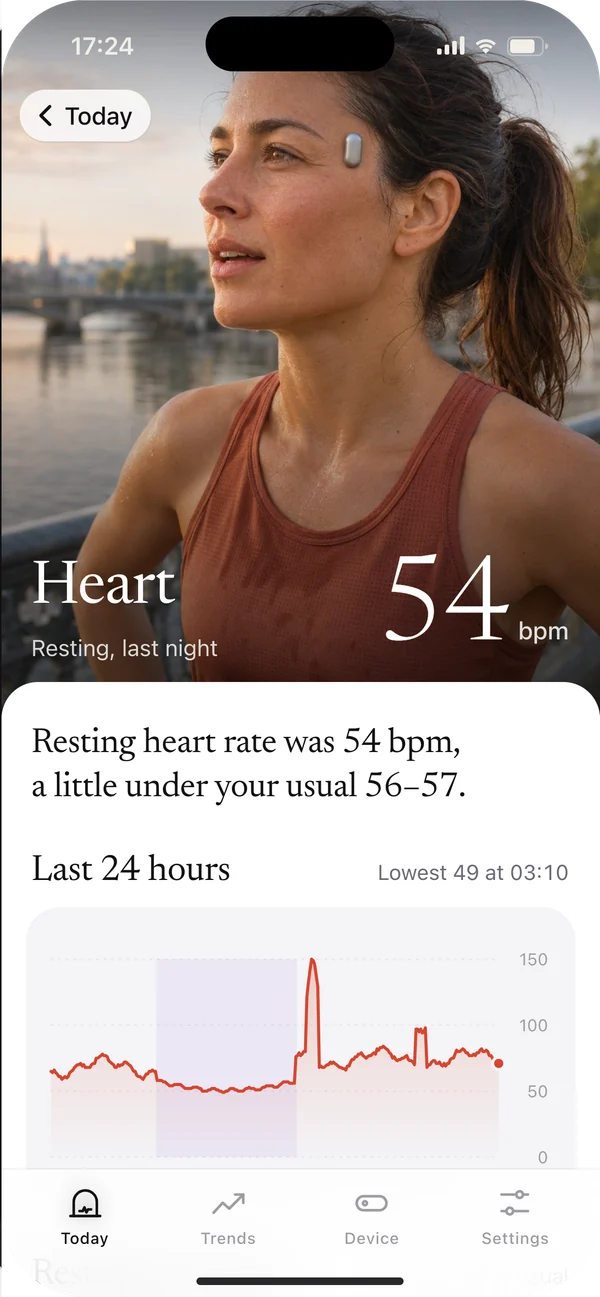
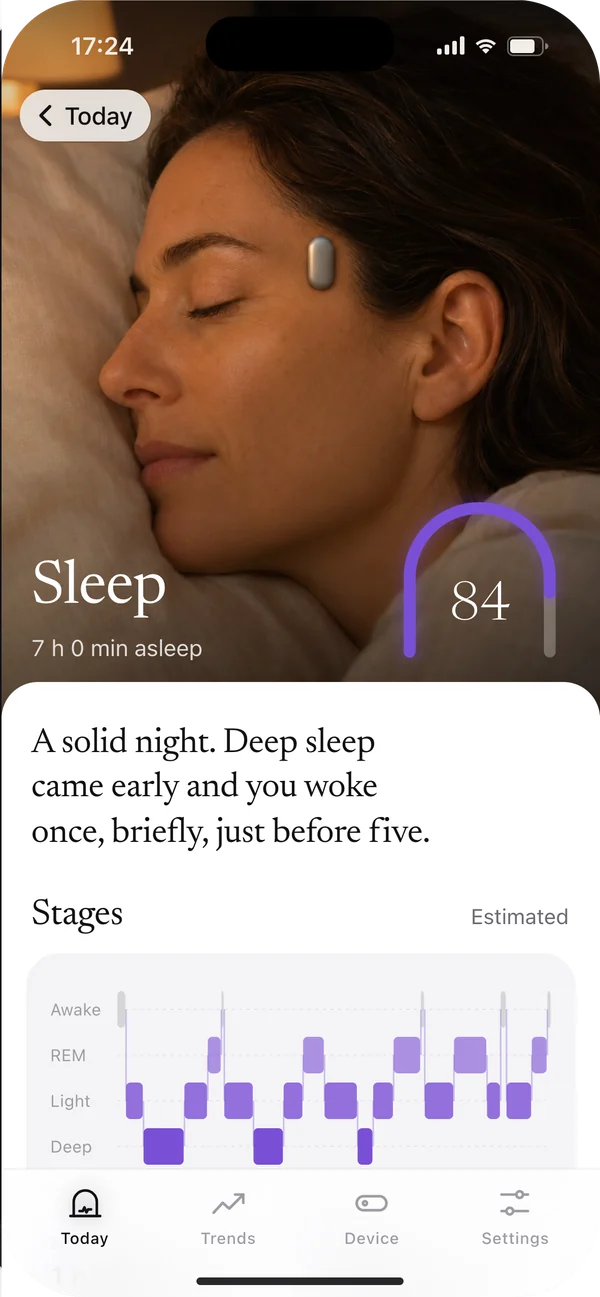
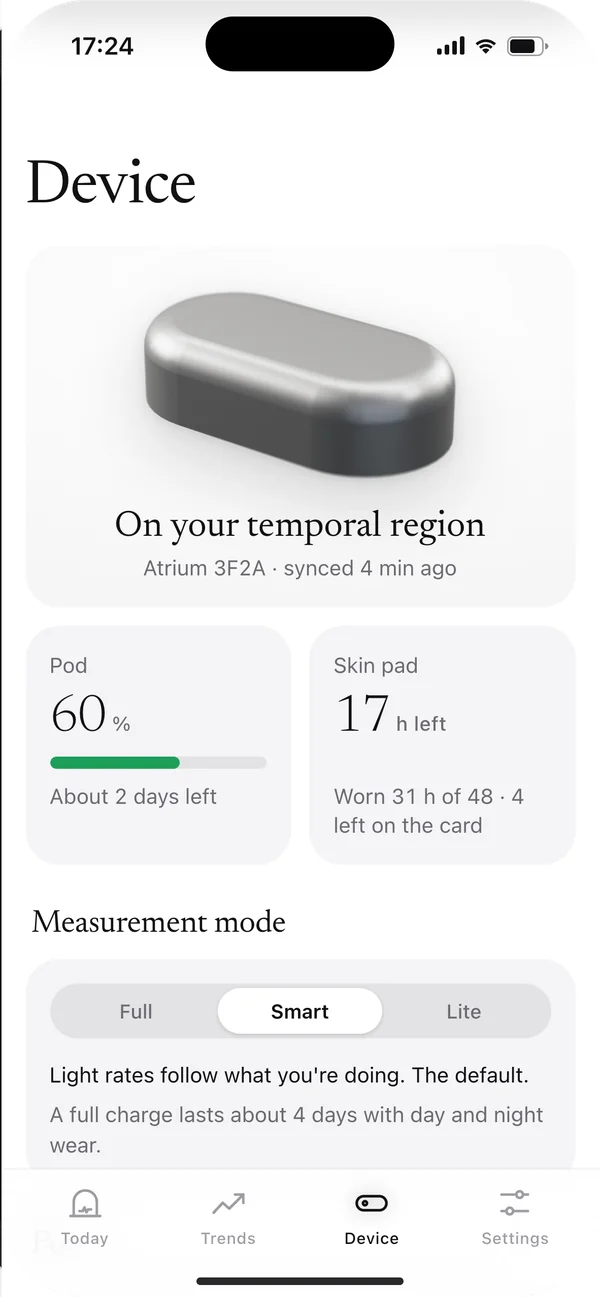
Rendered from the app’s design prototype, with sample data. The people in the photographs are illustrations.
The pod runs the Zephyr operating system. Its signal processing and power logic are covered by 177 automated tests, which run on a computer today because there is no pod yet to run them on. Updates arrive over Bluetooth, signed, and a faulty update reverts by itself. When the phone is out of reach the pod keeps about 20 hours of readings and syncs them when it returns.
Checked in simulation before it was built
Before any part was ordered, each piece of the design was modelled: the battery, the charger, the radio link, the heat, the timing of beats and the light in the skin. These models are published with their assumptions, and the first build exists to test them.
- 0.03 °C how much the electronics warm the skin under the pod, typically
- 96 min to charge to 80% on the Plinth
- ~20 h of readings the pod can hold without a phone
The radio is the hardest part to predict, because the head absorbs much of a 2.4 GHz signal. Simulated over the likely spread of antenna efficiency, head shadowing and phones, the link to a phone in hand or on a desk nearby holds in essentially every case, and it starts to fail only at several metres with the phone on the far side of the head, which is the case the pod’s log is there for.
How far light travels
An optical sensor reads blood by catching the light that scatters back out of the skin, and how deep that light goes depends on the distance between the light and the detector. In Atrium’s module that distance is about 2 mm, fixed by the package. A photon simulation of the tissue under the pod, at 40 million photons per run, keeps green light more than 99.9% in the scalp, while red and infrared stay 88 to 89% in the scalp and 11 to 12% in the temporalis, the jaw muscle that covers the skull at this point.
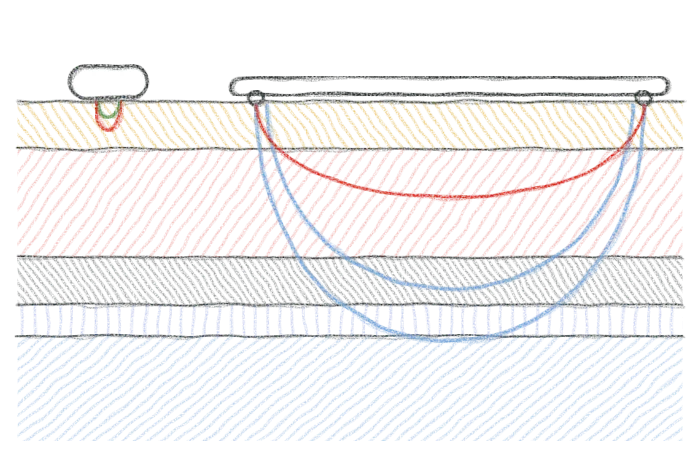
The same model puts the brain at 0.008% of the red and infrared pulse. An earlier design carried a second detector 18.5 mm out, which reached about 1% while the jaw muscle rose to roughly three quarters of the signal, and it was removed. At 30 mm, the spacing research systems use to see the brain, the model gives 10.6%, inside the 8 to 13% reported by Strangman et al. in 2013, which is why the model is trusted at 2 mm too.
2%: the brain share a study of 24 people would need to detect it reliably
Further processing does not close that gap in simulation. A study of 24 people would need the brain to be about 2% of the pulse to detect it reliably, 20 to 450 times more than the pod’s spacing allows depending on the person, and models trained on 300 simulated people did no better than assuming zero. Atrium reports pulse and heart rate variability, and makes no claim about blood flow in the brain.
Temple, a wearable worn at the same site, reports an index of brain blood flow from a proprietary formula. A preprint designed, funded and run by the company compared that index with time-domain near-infrared spectroscopy in 44 healthy men, with a median correlation of 0.84 to 0.91 with the deep signal and 0.49 to 0.77 with the scalp signal. Temple has not published its light-to-detector distance, the figure needed to apply this model to its device.
What the first build has to prove
Production files are complete for the first engineering build of 10 pods and 5 charging cases. Everything above was designed or simulated; the build is where it gets measured, and the results will be published whether or not they pass. These are the tests and the marks each one has to meet.
Source: Atrium open items and roadmap, as of 11 Nov 2026.
Design validation follows, with an injection-moulded shell, a production test jig and a locked production firmware. Beyond that, the next version is planned around a custom cell to bring the pod to around 17 mm, and bone-conduction audio with a voice pickup has been designed on paper and deliberately left out of this build. The roadmap has the full sequence, with the places where help is most welcome.
At a glance
- Size
- 20.9 × 11 × 5.3 mm capsule, about 1.07 cm³, flat top, satin silver-grey
- Sensors
- Optical module with green, red and infrared lights and one detector; motion sensor; skin and internal temperature sensors
- Boards
- Two six-layer boards, 0.82 mm thick, joined by a two-layer flexible circuit under the cell
- Radio
- Bluetooth Low Energy, with a chip antenna at the tip of the pod
- Power
- 30 mAh lithium-polymer cell, 9 × 9 × 4 mm; about 4 days in the default mode, estimated
- Charging
- Magnetic Plinth, either way round; pocket case with about 8 charges, estimated
- Wear
- Upright on the temple, held by a hidden 0.15 mm skin pad, six to a card
- Software
- Zephyr firmware with signed updates over Bluetooth; Flutter app for Android and iOS; no account and no cloud
- Parts
- From a standard online parts catalogue; both islands on one panel for a single assembly order
- Status
- Engineering validation; production files complete; first units not yet built
Source: Atrium README and architecture document.
Licences and sources
Atrium’s hardware is licensed under CERN-OHL-S, which permits manufacture and sale provided complete changes are published under the same terms. Firmware and app are licensed under Apache-2.0, and the documentation under CC BY-SA 4.0. The Open Source Hardware Association certified Atrium as open source hardware on 14 November 2026, under UID IN000108.
- Atrium: repository, design history, architecture, features, placement study, open items, roadmap.
- Simulations: power budget, HRV timing, link budget, thermal, charging, depth study.
- Firmware: firmware README, with the log size and the update process; the test count is the number of test cases in
firmware/testson 18 Nov 2026. - Optics: Strangman et al., PLOS ONE, 2013.
- Temple: science page, Gulati et al., bioRxiv, Sep 2026.
Atrium by Het Bhavsar / Local Forge. Images and film adapted from the Atrium documentation under CC BY-SA 4.0: product and board renders cropped from the repository’s renders; the exploded view rendered from its pod CAD model; app screens rendered from its app design prototype; film re-encoded without sound. The worn image is an illustration, and the drawings and charts are our own. This post is shared under the same licence. Atrium is a wellness and research project, not a medical device.